Split squats built as much strength as back squats in five weeks
Rugby players trained either the rear-foot-elevated split squat or the back squat. Strength, sprint speed and agility improved by the same amount in both groups.
The back squat is treated as the king of leg exercises. Single-leg work such as lunges and split squats is often treated as an accessory. A study from the University of Glasgow and Middlesex University tested whether that hierarchy holds.
Derrick Speirs and colleagues published the trial in the Journal of Strength and Conditioning Research in 2016. Eighteen academy rugby players, average body weight 97 kg (214 lb), were randomly assigned to one of two programmes for five weeks, twice a week:
- the bilateral back squat only, or
- the rear-foot-elevated split squat only, often called the Bulgarian split squat.
Both groups trained at the same percentage of their one-rep maximum in their own exercise.
What they found
- Both groups improved their back squat one-rep maximum and their split squat one-rep maximum by similar, large amounts.
- Both improved their 40 m sprint time and their pro-agility (change of direction) time.
- Neither improved significantly over 10 m.
- There were no differences between the groups on any measure.
The single-leg group got stronger at the back squat without performing it.
What it means
Single-leg exercises load each leg heavily with far less total weight on the spine. For men with sensitive backs, limited equipment or no squat rack, split squats and lunges are a full substitute, not a compromise.
How to apply it
- Use the rear-foot-elevated split squat as a main lower-body lift: 3 to 4 sets of 6 to 10 reps per leg.
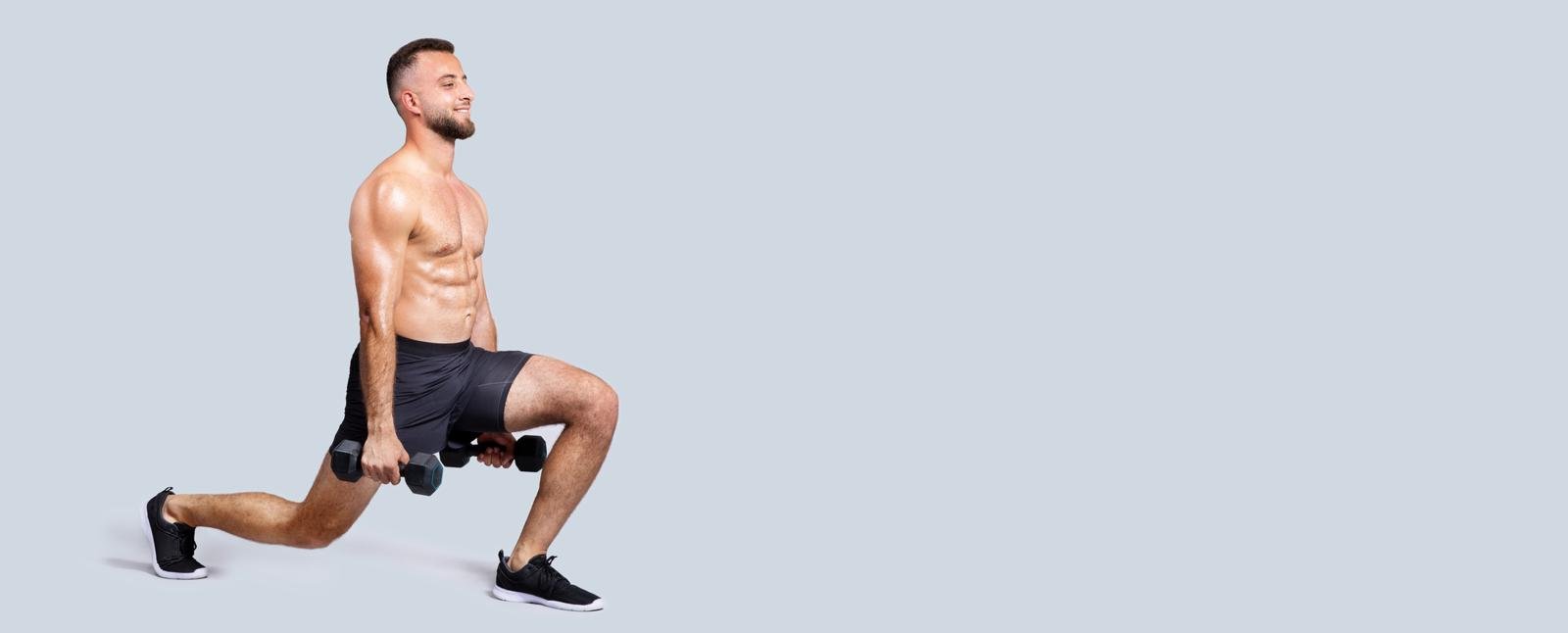
- Start with bodyweight, then hold dumbbells. Add load when every rep is controlled.
- Walking lunges work too: take long steps and lower the back knee close to the floor.
- If you squat with a barbell, add one single-leg exercise to correct side-to-side differences.
A note on the evidence
The study was small, short and limited to young rugby players with training experience. Longer studies in other groups would strengthen the finding, but the result matches the broader view that load and effort, not the exact exercise, drive strength gains.
Sources
- Speirs DE et al. Unilateral vs. bilateral squat training for strength, sprints, and agility in academy rugby players. Journal of Strength and Conditioning Research, 2016. doi:10.1519/JSC.0000000000001096