Seated leg curls built more hamstring muscle than lying leg curls
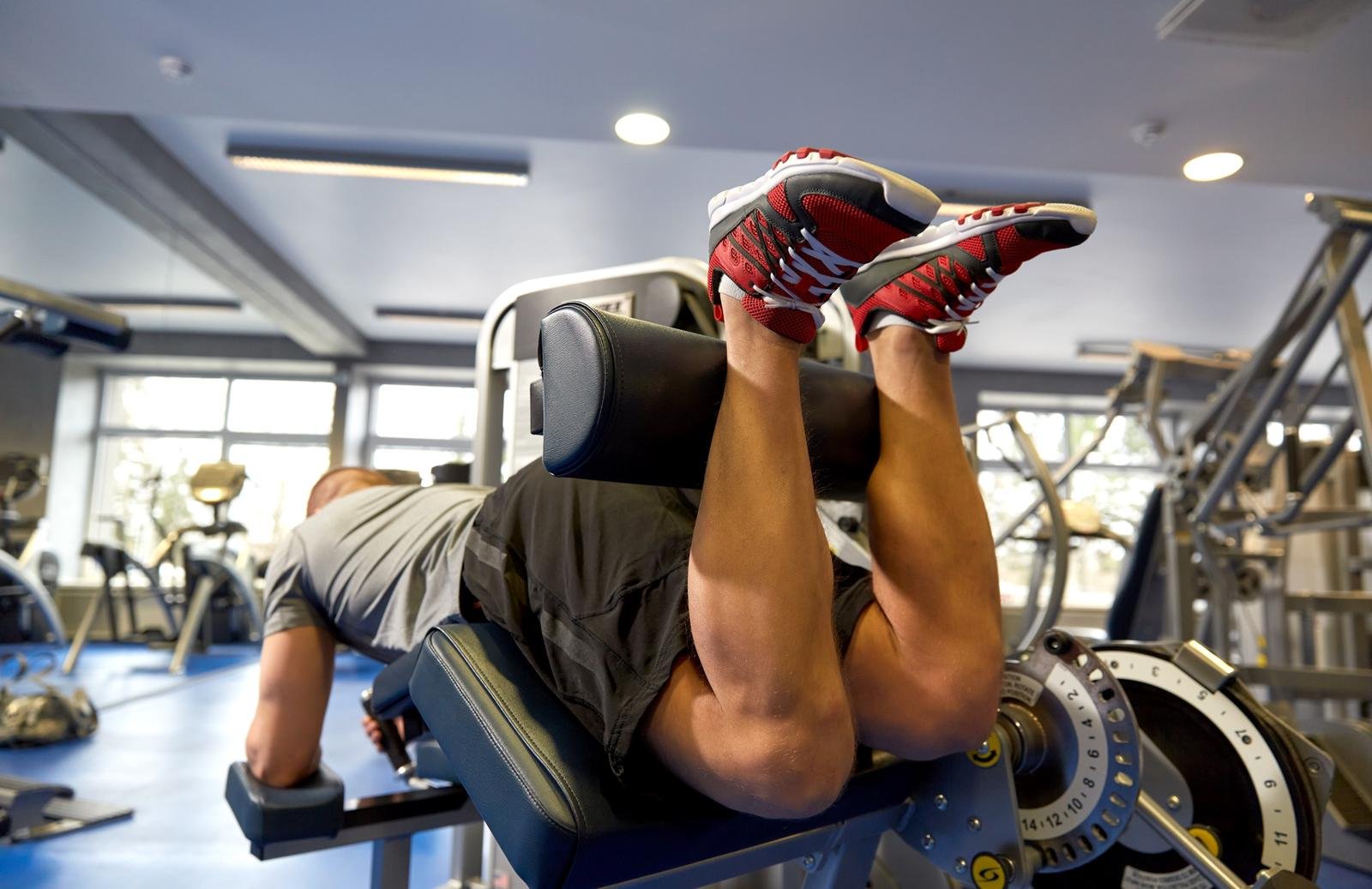
Each participant trained one leg seated and the other lying face down, for 12 weeks. The seated leg grew 14 percent, the lying leg 9 percent. The difference comes down to muscle length.
Most gyms have two leg curl machines: one where you sit and one where you lie face down. They look like variations of the same exercise. A team at Ritsumeikan University in Japan found that they are not equal for muscle growth.
Sumiaki Maeo and colleagues published the study in Medicine & Science in Sports & Exercise in 2021. Twenty healthy adults trained for 12 weeks, doing the seated leg curl with one leg and the lying (prone) leg curl with the other. Because each person trained both versions, differences in genetics, diet and sleep were cancelled out.
The programme was the same for both legs: 5 sets of 10 repetitions at 70 percent of one-repetition maximum, twice a week. Hamstring volume was measured with MRI before and after.
What they found
- Total hamstring volume increased by 14 percent in the seated leg and 9 percent in the lying leg.
- The difference came from the three hamstring muscles that cross both the hip and the knee, which grew by 8 to 24 percent seated against 4 to 19 percent lying.
- The one hamstring muscle that crosses only the knee grew by about the same amount in both legs.
- In a second part of the study, both versions protected the muscle equally well against soreness and damage from a later hard session.
What it means
Sitting bends the hip, which stretches the hamstrings before the curl even begins. Training a muscle while it is lengthened appears to be a stronger signal for growth. The same idea has since been tested for other muscles, with broadly similar results.
How to apply it
- If your gym has both, choose the seated leg curl as your main hamstring isolation exercise.
- Lean your torso slightly forward to increase the stretch further.
- Control the lowering phase and use the full range of motion, especially the stretched position.
- Keep a hip-hinge exercise, such as the Romanian deadlift, which also loads the hamstrings at long lengths.
A note on the evidence
The study was small and lasted 12 weeks. Participants were not experienced lifters. Training both legs differently in the same person is, however, a strong design for comparing two exercises.
Sources
- Maeo S et al. Greater hamstrings muscle hypertrophy but similar damage protection after training at long versus short muscle lengths. Medicine & Science in Sports & Exercise, 2021. doi:10.1249/MSS.0000000000002523