Plyometric training added up to 8.7 percent to vertical jump height
A Croatian meta-analysis pooled 26 studies of jump training. The countermovement jump improved most, by 8.7 percent on average.
Power, the ability to produce force quickly, declines faster with age than strength. Plyometrics, exercises built on jumping and rebounding, are the most direct way to train it.
Goran Marković of the University of Zagreb pooled the evidence in a meta-analysis published in the British Journal of Sports Medicine in 2007. He combined 26 studies that measured vertical jump height before and after a plyometric programme.
What they found
The average improvement depended on the type of jump tested:
- squat jump (from a static squat): 4.7 percent,
- countermovement jump (dip and jump): 8.7 percent,
- countermovement jump with arm swing: 7.5 percent,
- drop jump (step off a box and rebound): 4.7 percent.
The author concluded that plyometric training produces a statistically significant and practically relevant improvement in jump height.
What it means
The biggest gains came in jumps that use a fast stretch before the push, the movement pattern plyometrics trains. That stretch-shortening ability is used in sprinting, changing direction and catching yourself when you trip.
How to apply it
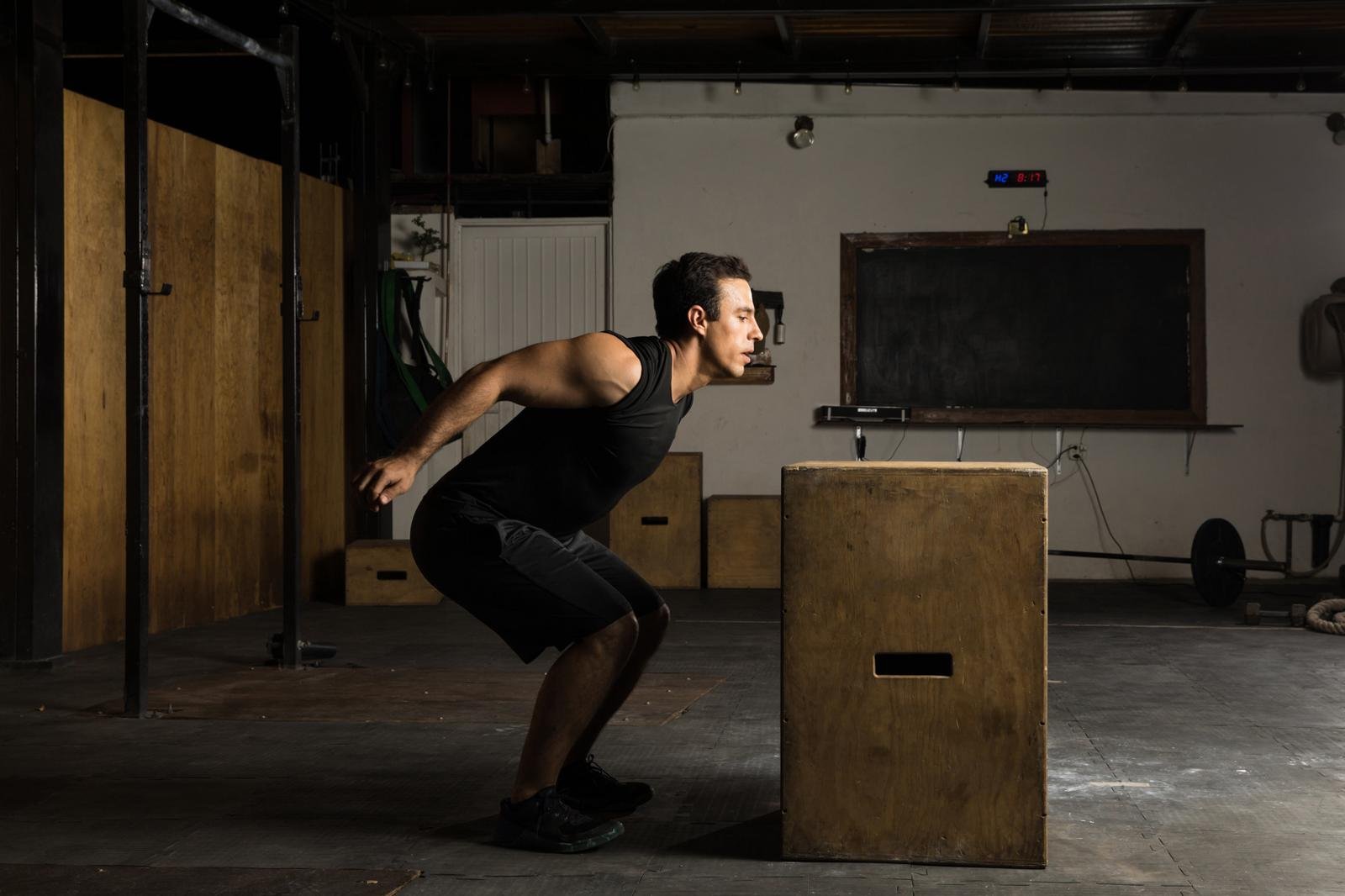
- Start with low-impact jumps: squat jumps, broad jumps and low box jumps onto a soft surface.
- Do 3 to 5 sets of 3 to 6 reps, resting fully between sets. Quality matters more than fatigue.
- Train jumps at the start of a session, after a warm-up, when you are fresh.
- Twice a week is enough. Progress to drop jumps only after several weeks.
- If you have knee or Achilles problems, build strength first and progress slowly.
A note on the evidence
The studies differed in design, and many involved young athletes. Older or untrained men may gain from a lower volume. The direction of the effect is consistent across the literature.
Sources
- Markovic G. Does plyometric training improve vertical jump height? A meta-analytical review. British Journal of Sports Medicine, 2007. doi:10.1136/bjsm.2007.035113