Jake Gyllenhaal boxed and lifted twice a day for Southpaw. Does cardio cost you muscle?
For Southpaw he trained twice a day for five months. For Road House, at 43, he trained before every shoot day. What two meta-analyses say about mixing endurance and strength work.
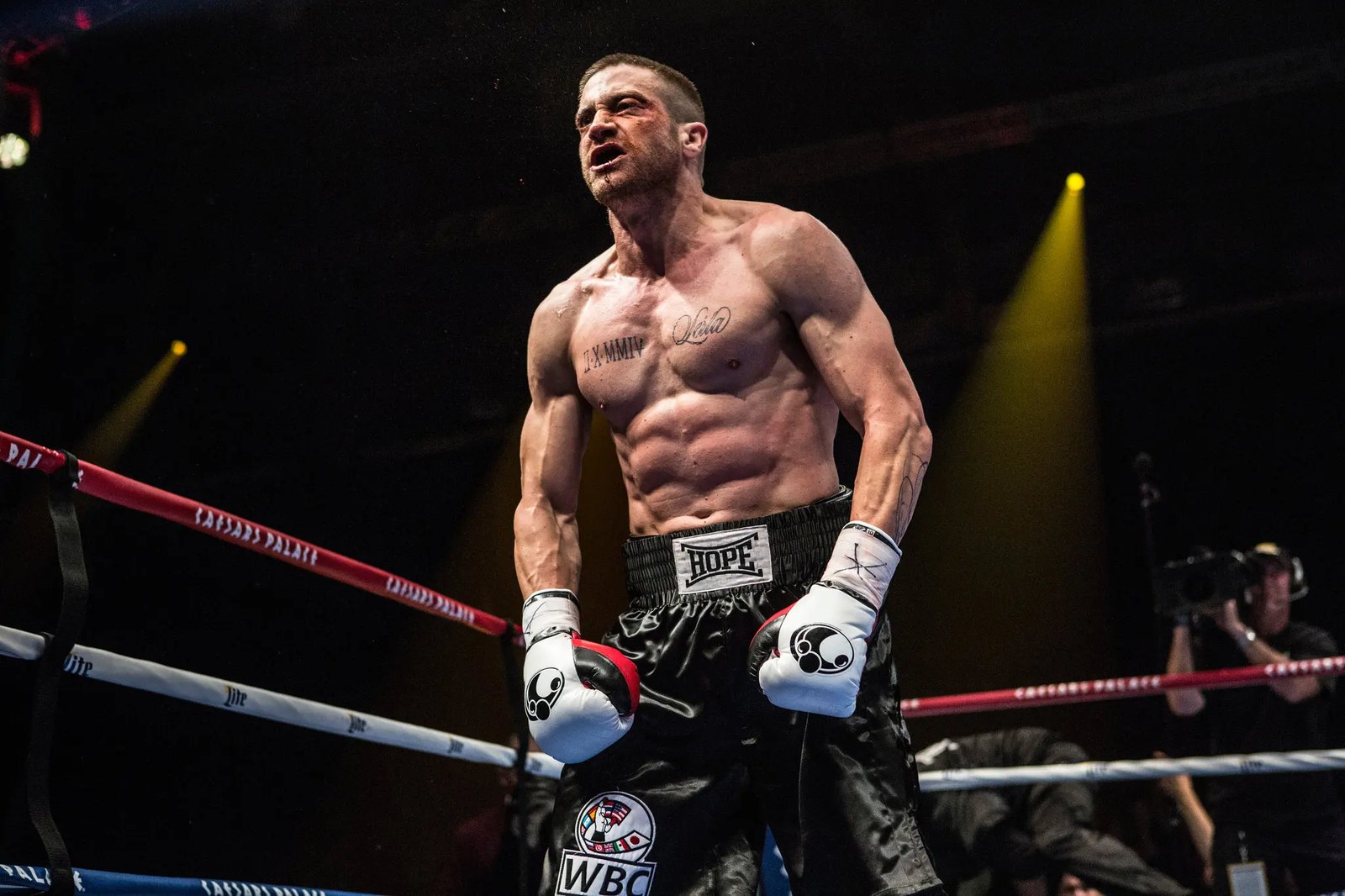
Jake Gyllenhaal had no boxing background when he was cast as champion Billy Hope in Southpaw (2015). "I spent five months training for this movie, two times a day, because I didn't really know how to box when I started," he told Den of Geek.
Nine years later, for the 2024 remake of Road House, he played a former UFC fighter at 43. "We trained about an hour, an hour and a half, every day before work," he told People.
What he did
The Southpaw preparation was a fighter's camp. Gyllenhaal told Bodybuilding.com that the weight training was a small part of it: most of the time was in the ring, with roadwork and treadmill running, and strength work built on dips, pull-ups, lunges, deadlifts and squats. In later months he reportedly trained up to six hours a day.
For Road House, trainer Jason Walsh built a phased plan: a baseline of conditioning, a muscle-building phase, then fight-specific work. Walsh's summary was simple: the basics, executed over and over.
What the research says
Mixing endurance training with strength training raises an old question: does cardio cost muscle? The answer has changed as the evidence has grown.
A 2012 meta-analysis in the Journal of Strength and Conditioning Research, led by Jacob Wilson, found that concurrent training reduced gains in muscle size, strength and especially power compared with strength training alone. The effect was larger with running than with cycling, and grew with the frequency and duration of endurance sessions.
A larger 2022 meta-analysis in Sports Medicine, led by Moritz Schumann, pooled 43 studies and found no significant interference with muscle growth or maximal strength. Explosive strength was still blunted, especially when both types of training were done in the same session.
For most men, that means cardio and lifting can coexist. The cost appears at high volumes, in the same session, and for power more than size.
How to apply it
- Separate the two when you can. Lift and do hard cardio on different days, or at least six hours apart.
- Lift first if it is one session. Strength work before conditioning protects the quality of the heavy sets.
- Prefer cycling or rowing for extra cardio. They interfere less than running in the research.
- Keep the basics. Squats, deadlifts, pull-ups and dips, three or four sets, twice a week.
Gyllenhaal's two films show both ends of the scale. You can build a fighter's body without a fighter's six-hour days.
Sources
- Den of Geek interview with Jake Gyllenhaal, 2015
- Bodybuilding.com interview with Jake Gyllenhaal, 2015
- People interview with Jake Gyllenhaal, March 2024
- Men's Health. Jason Walsh on Jake Gyllenhaal's Road House training, 2025
- Wilson JM et al. Concurrent training: a meta-analysis examining interference of aerobic and resistance exercises. Journal of Strength and Conditioning Research, 2012. doi:10.1519/JSC.0b013e31823a3e2d
- Schumann M et al. Compatibility of concurrent aerobic and strength training for skeletal muscle size and function: an updated systematic review and meta-analysis. Sports Medicine, 2022. doi:10.1007/s40279-021-01587-7