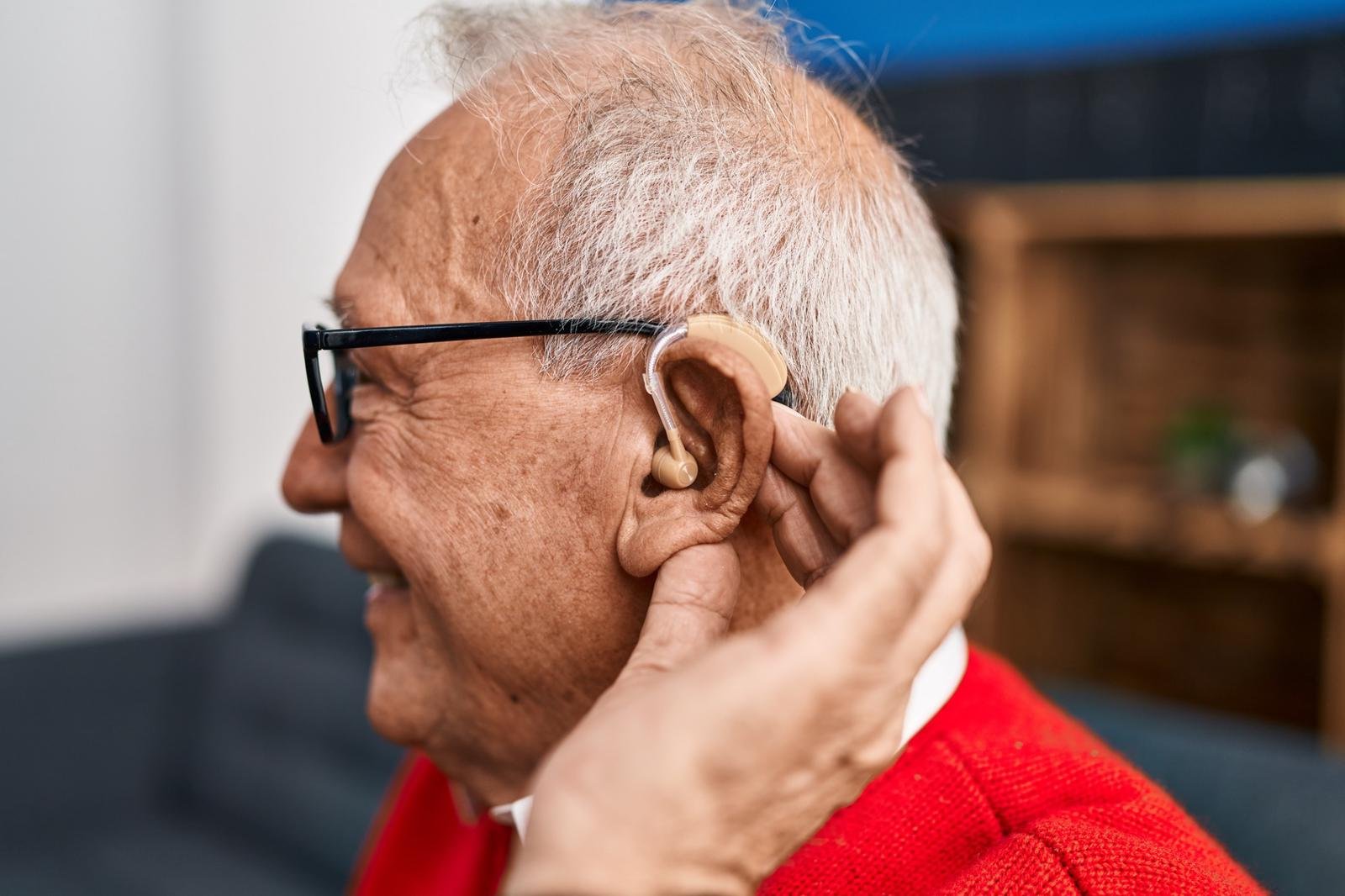
Hearing aids slowed cognitive decline by 48 percent in higher-risk older adults
Hearing loss is one of the largest modifiable risk factors for dementia. In the first major trial, hearing aids had no effect overall, but slowed decline by almost half in people at higher risk.
Hearing loss in midlife has been identified as one of the largest potentially modifiable risk factors for dementia. The ACHIEVE trial, led by Frank Lin of Johns Hopkins University, tested whether treating it changes the trajectory.
The results were published in The Lancet in 2023. The trial enrolled adults aged 70 to 84 with untreated hearing loss and no significant cognitive impairment. They were randomly assigned to a hearing intervention, which included hearing aids, fitting and counselling with an audiologist, or to a health education programme. Cognition was tracked for three years.
What they found
- Across all participants, the hearing intervention did not significantly slow cognitive decline over three years.
- In a pre-planned analysis of participants recruited from a long-running heart study, who were older and had more risk factors for cognitive decline, the hearing intervention slowed decline by 48 percent.
What it means
For people at higher risk, correcting hearing loss appears to protect thinking skills. For healthier people, three years may be too short to see an effect. Hearing aids also improve communication and reduce social isolation, which matter in their own right.
How to apply it
- Get your hearing tested if you often ask people to repeat themselves, struggle in noisy places or turn up the television.
- If you need hearing aids, wear them consistently. Benefit depends on use.
- Protect your hearing now: use ear protection around loud machinery, gunfire and concerts, and keep headphone volume moderate.
- Treat it as part of brain health, alongside exercise, blood pressure control and staying socially active.
A note on the evidence
The main result was null, and the benefit appeared in a subgroup, which needs confirmation. Participants knew which group they were in. The findings apply to older adults, not to people in their 40s and 50s.
Sources
- Lin FR et al. Hearing intervention versus health education control to reduce cognitive decline in older adults with hearing loss in the USA (ACHIEVE): a multicentre, randomised controlled trial. The Lancet, 2023. doi:10.1016/S0140-6736(23)01406-X