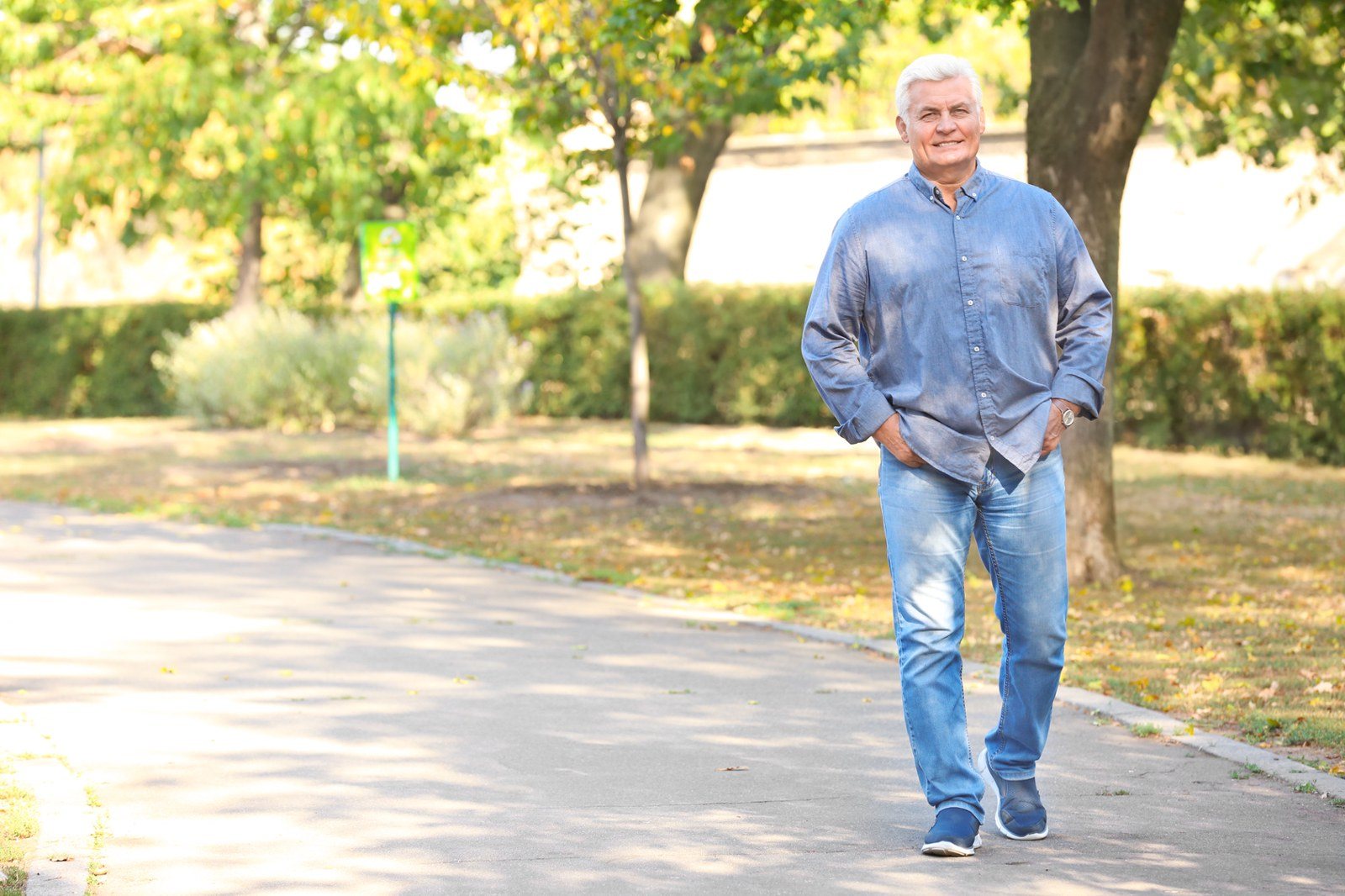
A two-to-five-minute walk after eating lowers blood sugar
A review of seven studies found that short bouts of light walking after meals smoothed the rise in blood sugar. Standing helped too, but less.
After a meal, blood sugar rises and the body releases insulin to bring it back down. Large, frequent rises are associated with a higher risk of type 2 diabetes and cardiovascular disease. Muscle contraction helps clear glucose from the blood, independently of insulin.
In 2022, Aidan Buffey and colleagues at the University of Limerick in Ireland published a systematic review and meta-analysis in Sports Medicine. They pooled seven studies that compared prolonged sitting with breaks of standing or light-intensity walking, usually lasting two to five minutes, after meals or throughout the day.
What they found
- Light walking breaks significantly lowered blood sugar and insulin after meals compared with uninterrupted sitting.
- Standing breaks also lowered blood sugar, but less, and did not significantly lower insulin.
- Benefits were seen in people with and without type 2 diabetes or prediabetes.
The researchers noted that blood sugar typically peaks 60 to 90 minutes after eating, so moving within that window is most likely to blunt the rise.
How to apply it
- After each main meal, walk for a few minutes: around the office, down the street, up and down the stairs.
- If walking is not possible, stand. It is less effective but better than sitting.
- Break up long periods of sitting during the working day with a short walk every 30 minutes or so.
- For larger effects, a longer walk of 10 to 15 minutes after dinner is a simple habit.
A note on the evidence
The included studies were small and short, mostly measuring blood sugar over a single day in laboratory conditions. They show an immediate effect on glucose, not a reduction in diabetes risk over years. The findings are consistent with broader evidence that less sedentary time benefits metabolic health.
Sources
- Buffey AJ et al. The acute effects of interrupting prolonged sitting time in adults with standing and light-intensity walking on biomarkers of cardiometabolic health in adults: a systematic review and meta-analysis. Sports Medicine, 2022.