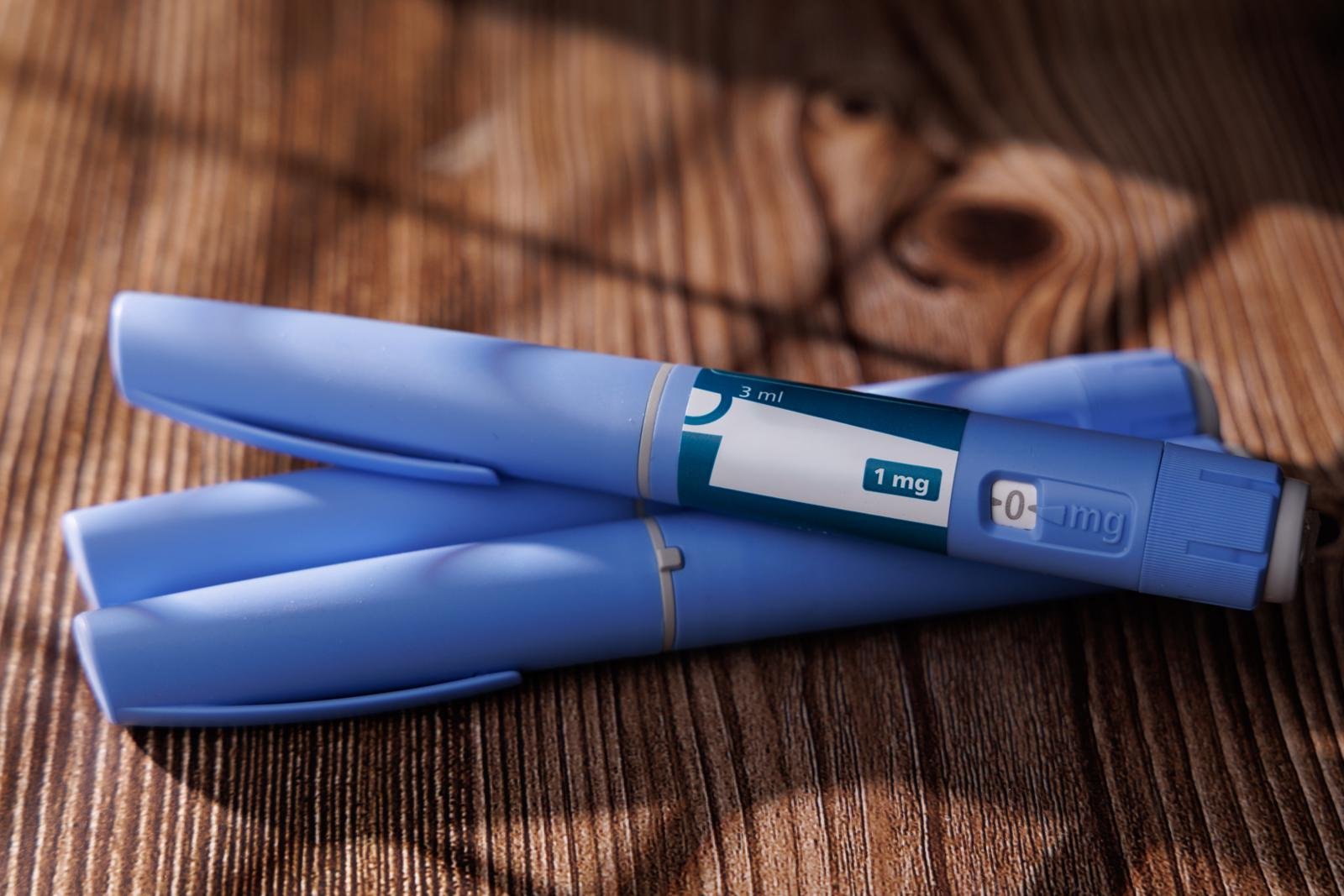
Retatrutide cut body weight by 25 percent in its first phase 3 trial
The new triple-hormone drug was tested in 2,339 adults with obesity for 80 weeks. At the highest dose, average weight loss was a quarter of body weight.
Retatrutide is the next weight-loss drug from Eli Lilly after tirzepatide. Where semaglutide acts on one gut-hormone receptor (GLP-1) and tirzepatide on two, retatrutide acts on three: GLP-1, GIP and glucagon.
The first phase 3 trial, TRIUMPH-1, was published in the New England Journal of Medicine in November 2026, led by Ania Jastreboff of Yale University. It enrolled 2,339 adults with obesity and without diabetes. Participants received a weekly injection of retatrutide at 4 mg, 9 mg or 12 mg, or a placebo, for 80 weeks. The trial was funded by Eli Lilly.
What they found
- Average weight change was −17.6 percent at 4 mg, −23.7 percent at 9 mg and −25.0 percent at 12 mg, against −3.9 percent with placebo.
- In participants with knee osteoarthritis, knee pain fell more with retatrutide than with placebo.
- In participants with obstructive sleep apnoea, breathing interruptions during sleep fell by roughly 32 to 34 events an hour at the higher doses, against about 10 with placebo.
- The most common side effects were gastrointestinal.
What it means
A quarter of body weight is close to what bariatric surgery typically achieves. But drugs in this class also remove muscle along with fat unless that is actively prevented, and weight tends to return when treatment stops.
How to apply it
- These are prescription medicines for obesity, not shortcuts for the last few kilograms. Retatrutide had not been approved for general use when the trial was published.
- Anyone on a GLP-1-type drug should strength train at least twice a week and eat enough protein, roughly 1.2 to 1.6 g per kg of body weight, to protect muscle.
- Plan for the long term: what happens to diet and training if the drug stops matters as much as the weight lost on it.
- Do not use unlicensed "research peptide" versions sold online. Their contents and doses are not controlled.
A note on the evidence
TRIUMPH-1 was large and placebo-controlled, but industry-funded, and long-term safety beyond 80 weeks is not yet known. Body composition results, including muscle loss, will matter for how the drug is used.
Sources
- Jastreboff AM et al. Retatrutide, a triple hormone receptor agonist, for treatment of obesity. New England Journal of Medicine, 2026. doi:10.1056/NEJMoa2604169