Men lose 3 to 8 percent of their muscle every decade after 30. Here is how to slow it
The decline starts earlier than most men think and speeds up after 60. Strength is lost even faster than muscle.
Muscle mass and strength generally peak between the ages of 20 and 35. What follows is a slow decline that most men do not notice until it starts to limit what they can do.
How fast the loss happens
In a review published in Current Opinion in Clinical Nutrition and Metabolic Care in 2004, Elena Volpi and colleagues at the University of Texas Medical Branch estimated that muscle mass falls by about 3 to 8 percent per decade after the age of 30, and that the rate of loss is higher after 60. The age-related loss of muscle mass, strength and function is known as sarcopenia.
Strength is lost faster than muscle. A review by Mitchell and colleagues in Frontiers in Physiology in 2012 reported that, at around 75, men lose about 0.8 to 1 percent of their muscle mass per year, but 3 to 4 percent of their strength.
Why it matters
Muscle is not only about appearance. Loss of muscle is accompanied by a rise in fat mass and is linked to insulin resistance, falls, fractures and loss of independence. Grip strength and leg strength are among the strongest predictors of health in later life.
How to slow it
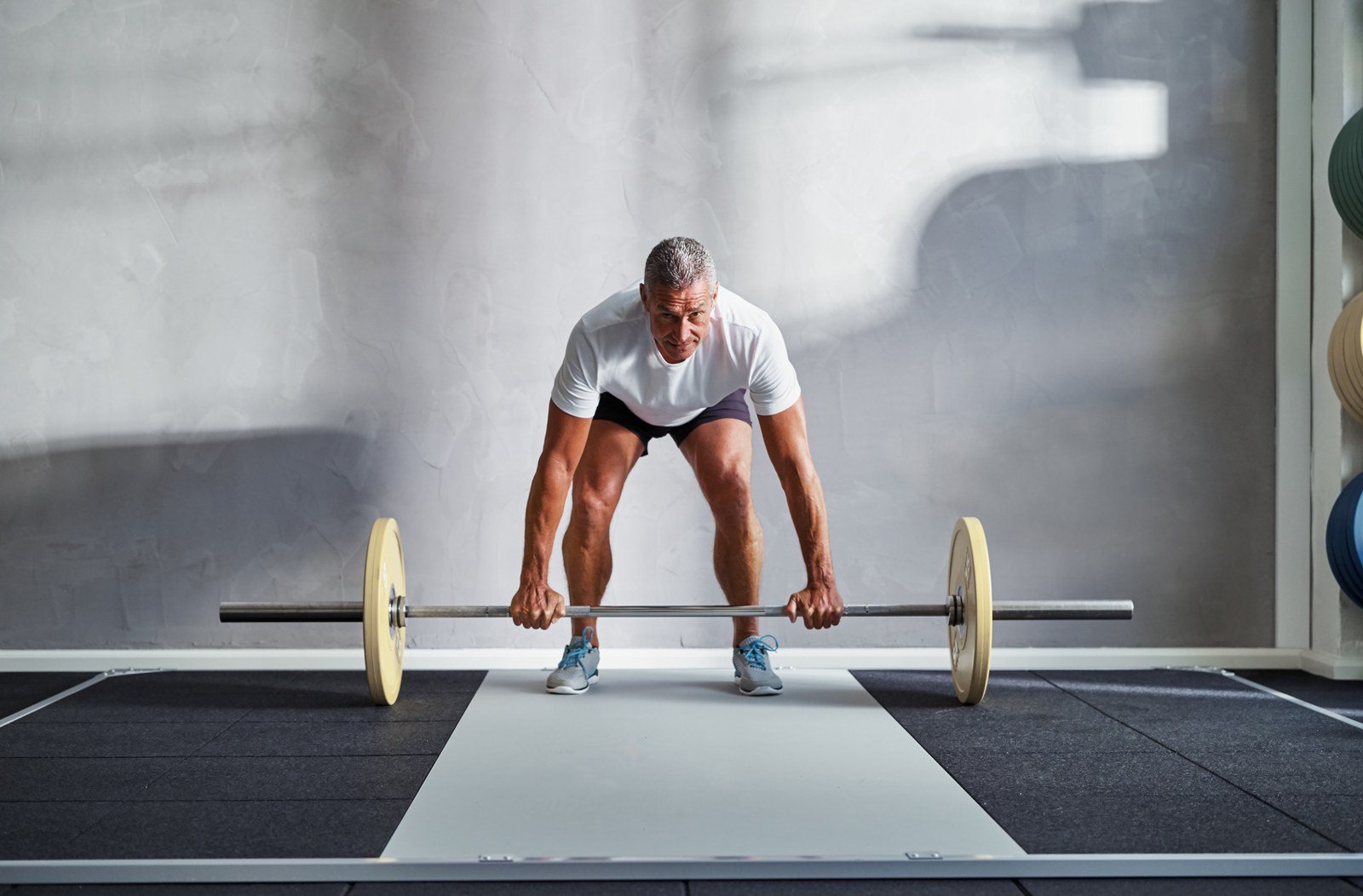
- Strength train at least twice a week. Resistance training is the most effective tool for maintaining and rebuilding muscle at any age. Cover the legs, hips, back, chest and shoulders.
- Keep the loads challenging. Light, easy exercise maintains less muscle than sets taken close to fatigue.
- Eat enough protein. Older muscle responds less to protein, so larger servings spread across the day may be needed.
- Stay active between sessions. Walking and daily movement help preserve muscle function.
- Start now. It is easier to build a reserve of muscle at 35 or 45 than to regain it at 70, although training still works at that age.
A note on the evidence
The rates quoted are averages from many studies and vary widely between individuals. Inactive men lose muscle faster. Men who train regularly can maintain far more muscle and strength into later life than these figures suggest.
Sources
- Volpi E, Nazemi R, Fujita S. Muscle tissue changes with aging. Current Opinion in Clinical Nutrition and Metabolic Care, 2004.
- Mitchell WK et al. Sarcopenia, dynapenia, and the impact of advancing age on human skeletal muscle size and strength; a quantitative review. Frontiers in Physiology, 2012.