Men and women over 50 gained about a kilogram of muscle in five months of lifting
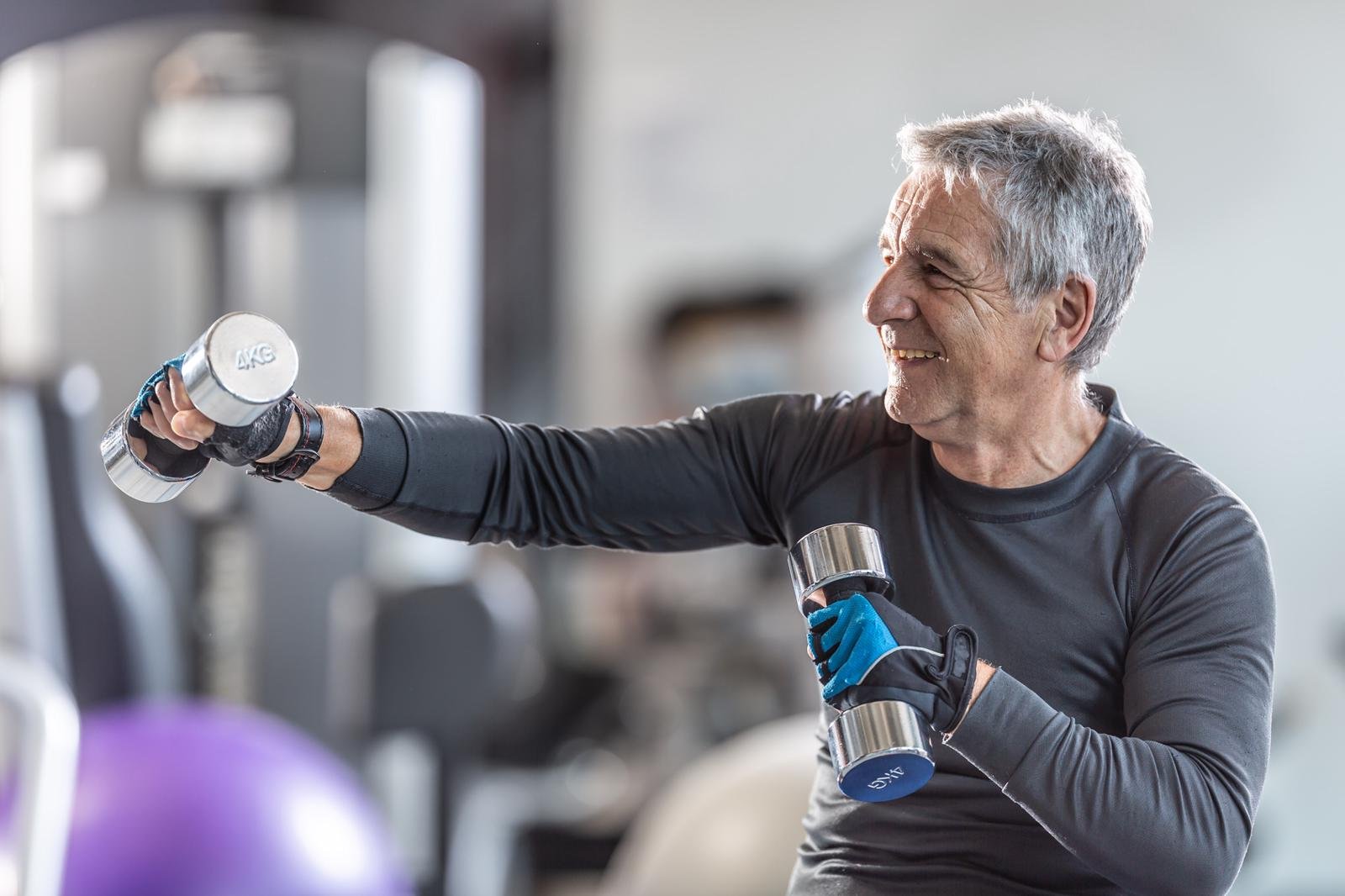
A University of Michigan meta-analysis pooled 49 trials in adults aged 50 and over. Resistance training added lean mass at every age studied, and more volume added more.
From middle age, men lose muscle every decade they do not train for it. The question for anyone over 50 is whether lifting can still reverse that.
Mark Peterson, Ananda Sen and Paul Gordon at the University of Michigan pooled the evidence in a meta-analysis published in Medicine & Science in Sports & Exercise in 2011. They combined 49 studies with 1,328 participants aged 50 to 83.
What they found
- Resistance training increased lean body mass by an average of 1.1 kg (2.4 lb).
- The average programme lasted about 20 weeks.
- Programmes with more total volume, meaning more sets, produced larger gains.
- Older participants still gained muscle, though the response tended to be smaller with increasing age.
What it means
A kilogram of lean mass over five months sounds modest. Set against the loss that happens without training, it is a reversal of several years of decline. Muscle also matters beyond appearance: it protects blood sugar control, bone density and the ability to stay independent.
How to apply it
- Train every major muscle group at least twice a week.
- Use compound lifts: a squat or leg press, a hip hinge, a push and a pull.
- Work up to 3 sets per exercise. Volume was the clearest predictor of muscle gain.
- Take sets close to failure, leaving one or two reps in reserve.
- Eat protein at every meal. Older muscle needs more protein per meal to respond.
A note on the evidence
The included studies varied in design, duration and population, and most were short. Lean mass measured by scan includes water and organs, not muscle alone. The direction of the finding is supported by many later trials.
Sources
- Peterson MD, Sen A, Gordon PM. Influence of resistance exercise on lean body mass in aging adults: a meta-analysis. Medicine & Science in Sports & Exercise, 2011. doi:10.1249/MSS.0b013e3181eb6265