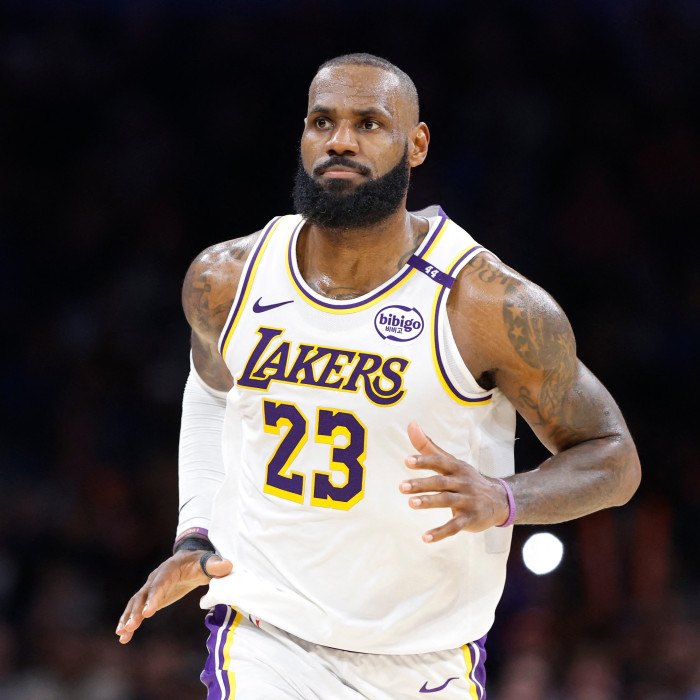
LeBron James reportedly spends $1.5 million a year on his body. His trainer says sleep matters most
Cryotherapy, cold plunges and hyperbaric chambers get the headlines. James and trainer Mike Mancias say the base is 8 to 10 hours of sleep. Two studies show why.
LeBron James has played more than two decades in the NBA, longer than almost anyone at his level. In 2016, podcaster Bill Simmons reported that James spends about $1.5 million a year on his body: trainers, therapists, cryotherapy, cold plunges and more.
Asked on Tim Ferriss's podcast in 2018 what matters most, James and his trainer of many years, Mike Mancias, gave the same answer. Sleep. "Sleep is the best recovery that you can have," James later said in Netflix's Starting 5.
What he did
James told Ferriss he aims for eight to nine hours a night, sometimes ten. Mancias said he asks James every day how much he slept. The routine is about environment: devices off, a dark room, a cool temperature of about 20 to 21°C (68 to 70°F) and a sleep app playing rain on leaves through the night.
Mancias's explanation was straightforward: the body repairs itself while we sleep, in deep sleep and REM sleep. The expensive tools are added to that foundation, not used in place of it.
What the research says
Two studies explain why a basketball player would treat sleep as training.
In 2011 the journal Sleep published a study by Cheri Mah at Stanford. Eleven players from the university's men's basketball team extended their sleep to a target of ten hours a night for five to seven weeks. Their sprint time over 282 feet (86 m) fell from 16.2 to 15.5 seconds, and free-throw and three-point accuracy each rose by about 9 percent.
The second concerns injury. In 2014, Matthew Milewski and colleagues published a study in the Journal of Pediatric Orthopaedics of 112 young athletes. Those who slept less than eight hours a night were 1.7 times more likely to be injured than those who slept more.
Both studies were small, and neither involved men in their 40s. But the direction is consistent with a large body of research: sleep loss slows reaction time, raises perceived effort and impairs tissue repair.
How to apply it
- Set a fixed bedtime. Count back eight hours from your alarm and protect that window.
- Cool, dark and quiet. Aim for about 18 to 20°C (64 to 68°F), blackout curtains and the phone outside the bedroom.
- Track the number for two weeks. Most men overestimate how long they sleep.
- Spend on sleep before gadgets. A better mattress and earlier nights beat any recovery device.
James's budget buys every recovery tool available. The one he values most costs nothing.
Sources
- The Tim Ferriss Show, episode with LeBron James and Mike Mancias, November 2018
- Netflix. Starting 5, 2024
- Mah CD et al. The effects of sleep extension on the athletic performance of collegiate basketball players. Sleep, 2011. doi:10.5665/SLEEP.1132
- Milewski MD et al. Chronic lack of sleep is associated with increased sports injuries in adolescent athletes. Journal of Pediatric Orthopaedics, 2014. doi:10.1097/BPO.0000000000000151