Full squats built more glute muscle than half squats in a 10-week trial
Japanese researchers scanned the legs of men who squatted deep or shallow. The quadriceps grew the same. The glutes and adductors did not.
How deep to squat is one of the most argued points in strength training. A study using magnetic resonance imaging gave a clear answer for muscle size.
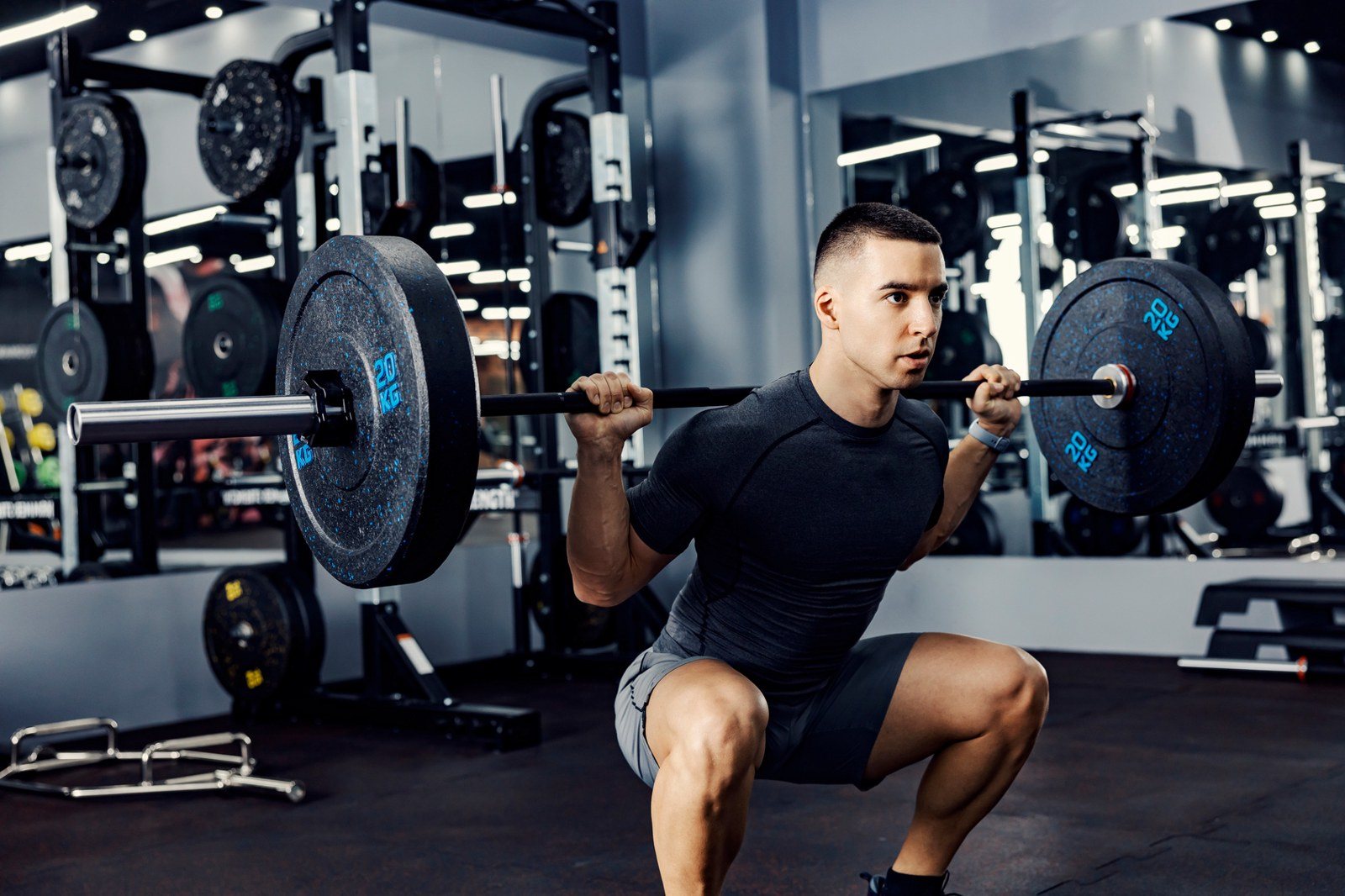
Keitaro Kubo and colleagues at the University of Tokyo published the trial in the European Journal of Applied Physiology in 2019. Seventeen young men were randomly assigned to train either full squats, with the knee bending through about 140 degrees, or half squats, to about 90 degrees. Both groups trained twice a week for 10 weeks. Muscle volume was measured by MRI before and after.
What they found
- Quadriceps growth was similar in both groups.
- Gluteus maximus and adductor (inner thigh) growth was significantly greater in the full squat group.
- Hamstrings barely changed in either group.
- Full squat strength rose by about 32 percent in the full squat group and 11 percent in the half squat group. Half squat strength improved similarly in both.
What it means
The glutes and adductors work hardest at the bottom of the squat, where the hips are most flexed. Cutting the squat short removes most of that work. The quadriceps are challenged through both ranges. The hamstrings change length very little during a squat, which is why they need their own exercises, such as Romanian deadlifts and leg curls.
How to apply it
- Squat as deep as you can while keeping a neutral spine and your heels on the floor.
- If mobility limits depth, use a slightly wider stance, elevate the heels on small plates, or use a goblet squat to learn the pattern.
- Train the hamstrings directly. The squat does not cover them.
- Partial squats have a place for specific strength work in athletes, but not as the main lower-body exercise for size.
A note on the evidence
The study was small and involved untrained men over 10 weeks. Still, it is one of the few to measure actual muscle volume rather than muscle activity, and the results are consistent with later research favouring training muscles at longer lengths.
Sources
- Kubo K, Ikebukuro T, Yata H. Effects of squat training with different depths on lower limb muscle volumes. European Journal of Applied Physiology, 2019.