Foam rolling works better as a warm-up than as recovery
A German meta-analysis pooled 21 studies on foam rolling. The effects were small, but they were clearest for flexibility and sprinting when rolling came before exercise.
Foam rollers are in almost every gym, used before training to loosen up and after training to recover. Researchers at Ruhr University Bochum in Germany pooled the evidence to see what rolling actually does.
Thimo Wiewelhove, Alexander Ferrauti and colleagues published the meta-analysis in Frontiers in Physiology in 2019. They combined 21 studies: 14 tested rolling before exercise, as a warm-up, and 7 tested rolling after exercise, as recovery.
What they found
Rolling before exercise:
- improved sprint performance by 0.7 percent and flexibility by 4.0 percent,
- had a negligible effect on jumping and strength.
Rolling after exercise:
- slightly reduced the drop in sprint performance (3.1 percent) and strength (3.9 percent) after hard exercise,
- reduced perceived muscle pain by 6.0 percent,
- had a trivial effect on jumping.
Foam rollers tended to help strength recovery more than handheld roller sticks.
What it means
The authors described the effects as minor and in some cases negligible. Rolling can still be useful, especially to gain range of motion before training without the loss of strength that long static stretching can cause. Its value as a recovery tool is smaller than its popularity suggests.
How to apply it
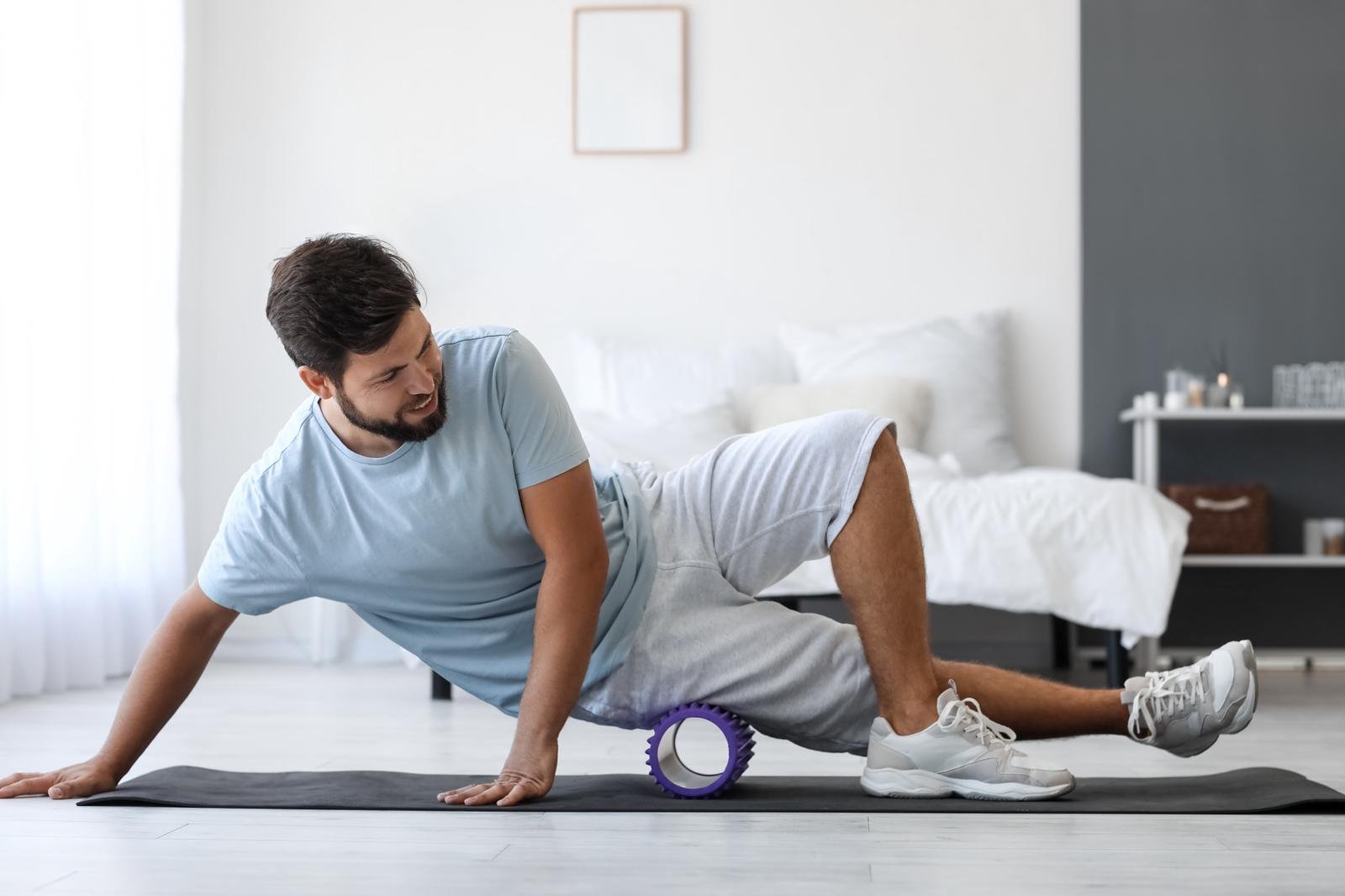
- Use 30 to 60 seconds of rolling per muscle group as part of a warm-up, especially for tight hips, calves and thighs.
- Follow it with dynamic movements and lighter sets of your first exercise.
- After training, roll if it reduces soreness for you, but do not rely on it in place of sleep, food and planned rest days.
- Choose a firm foam roller over a stick for larger muscles.
A note on the evidence
The studies were small and used different rolling times and techniques. Most measured short-term effects, within hours of rolling. Long-term benefits for injury risk or training progress have not been shown.
Sources
- Wiewelhove T et al. A meta-analysis of the effects of foam rolling on performance and recovery. Frontiers in Physiology, 2019. doi:10.3389/fphys.2019.00376