Same scale, different body: the coach who plans for your worst week
In an exclusive interview, Federico Veneroni, a 28-year-old coach from Milan who left a finance degree for training, explains why he builds every plan around the worst week of the year, not the best.
Federico Veneroni is 28, born in Milan, and has spent his adult life doing the opposite of what was expected of him. He left a finance degree at Bocconi University in his final year, talked his way into a UK training career over a single frustrated night, and has spent the years since building an online coaching business for busy professionals: people, as he puts it, "extremely successful at everything except their own body."
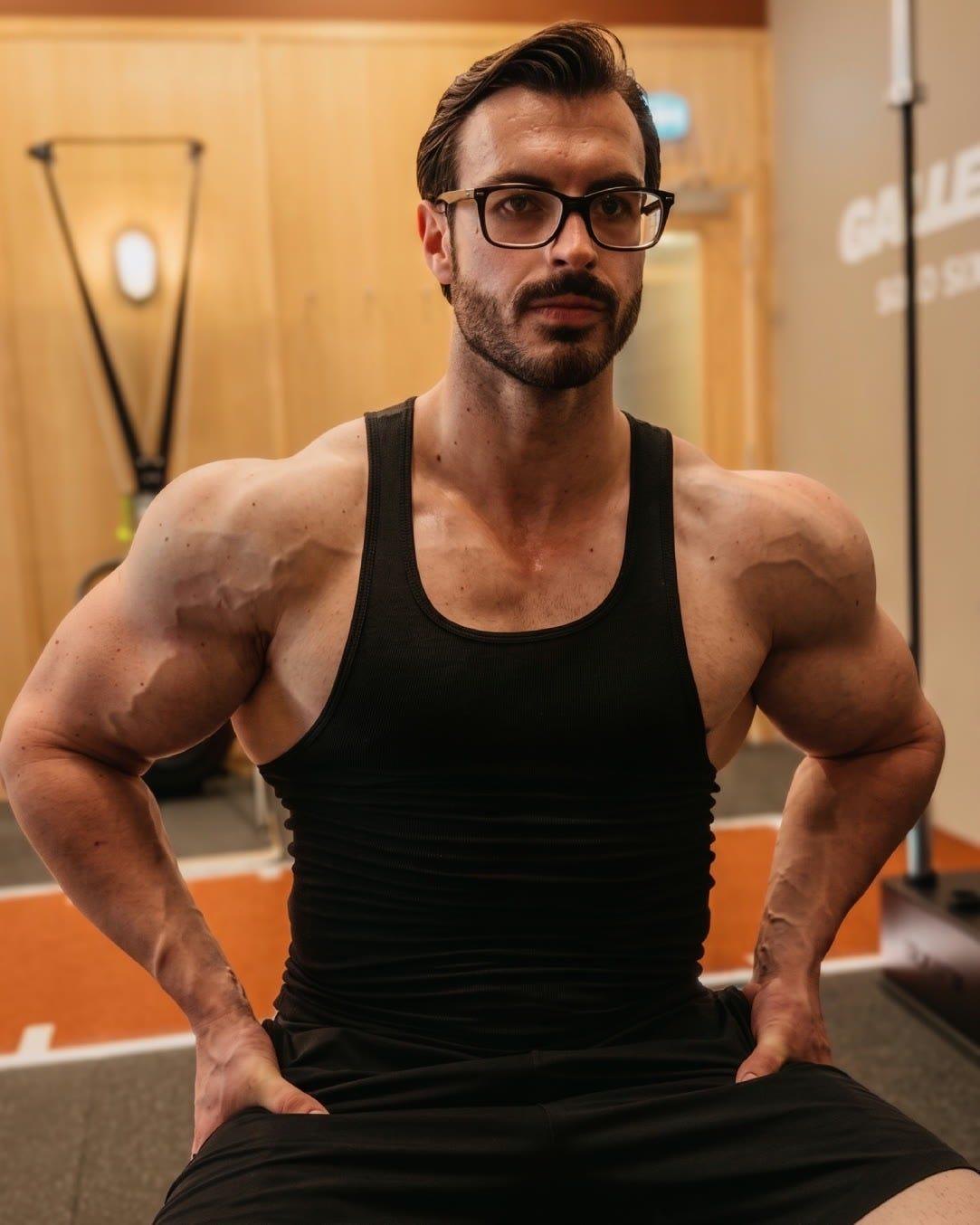
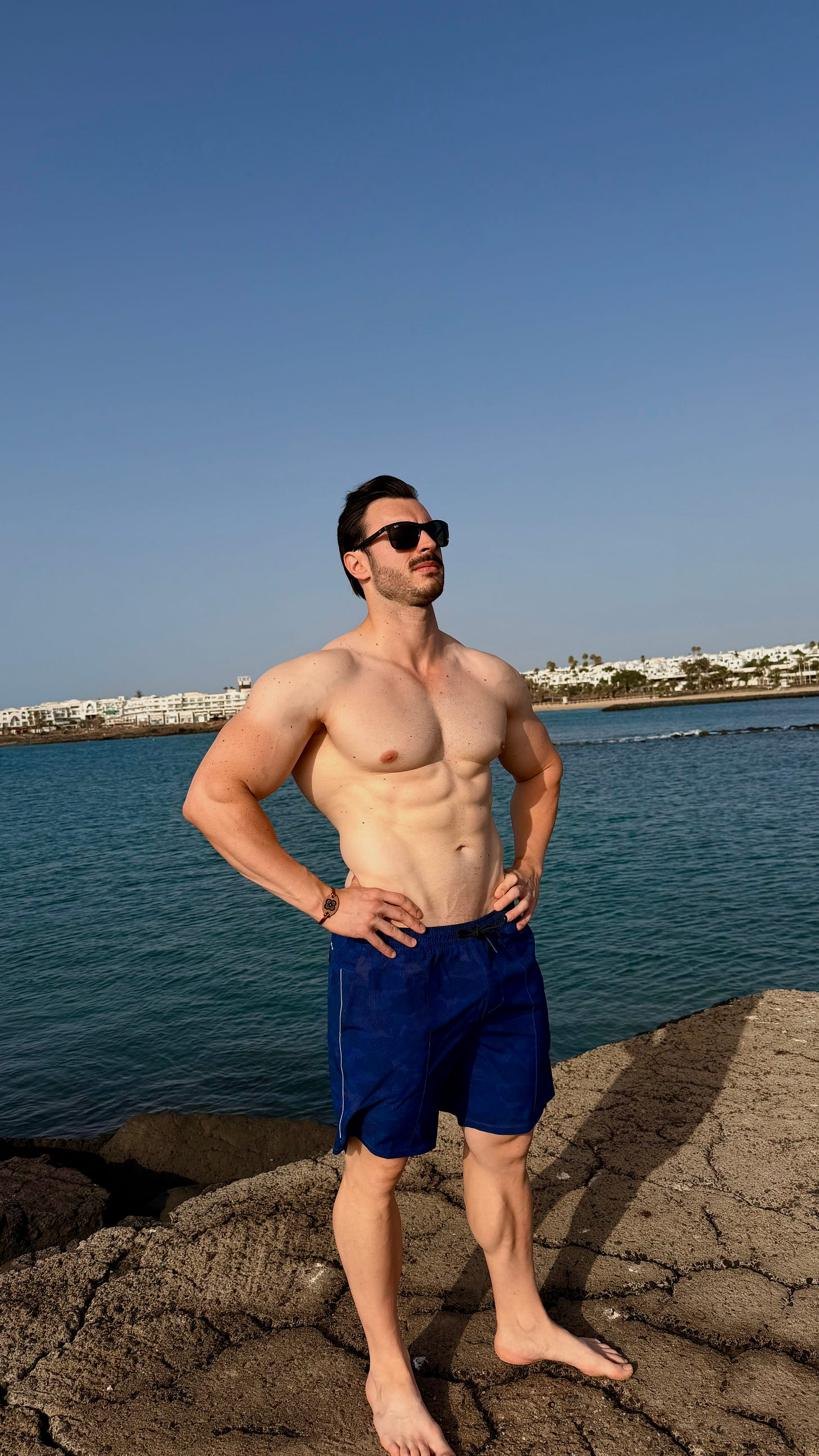
He sent us two photos of himself at exactly the same body weight, years apart, and asked us to run them side by side. We asked him to walk us through the rest. His answers have been edited for length and clarity.
From Milan to London
Let's start with how you ended up in London.
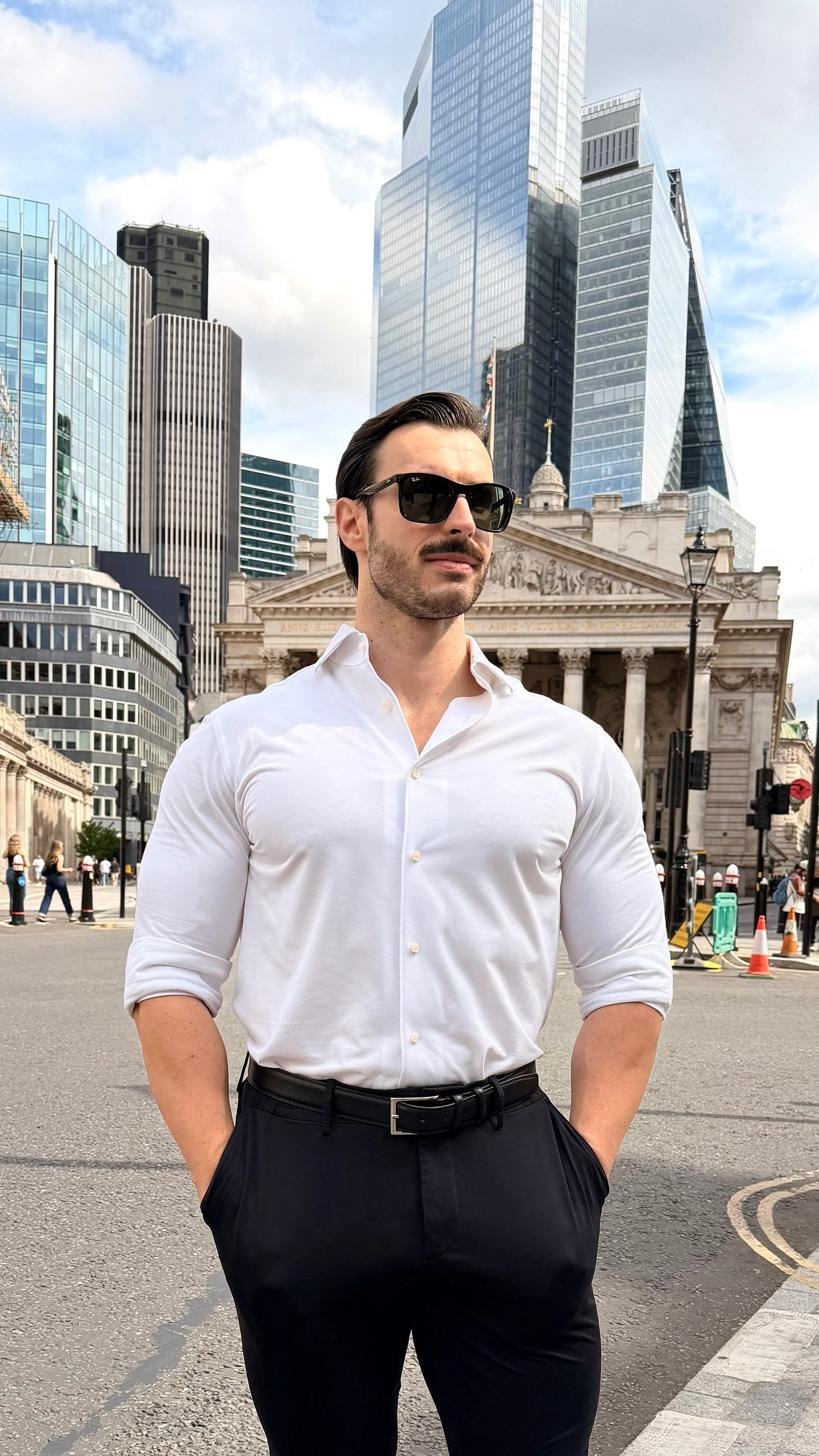
The move to London was sudden. I had just turned 22 and had just left university. A couple of gyms in Milan had approached me to run the service side of their clubs, and a month later I still had no start date. One night, after an evening out with friends, I got home frustrated and started sending my CV to every gym in the UK I could find. I wanted somewhere more stimulating than Italy for my career. The next morning my inbox was full of gyms asking to see me straight away. Two weeks later I was living in London. That was 2019.
Your background is economics, not fitness. Was an office job ever really the plan?
No. An office was supposed to be the plan, according to my parents, and I studied Economics and Finance at Bocconi University in Milan. I left in my final year because I never saw myself behind a desk. Coaching was the natural path. I qualified as a personal trainer at 18 and was already coaching people all through university, first in Italy, then in London once I moved. My client base is worldwide now.
The coaching
Walk us through what you actually do. Who are your clients, and how does the coaching work?
My clients are busy professionals: executives, business owners, high achievers. People who are extremely successful at everything except their own body. I am one of them, so I understand the struggle. High achievers have no problem pushing harder to get more, but the body does not work like that. The best results come from a balance between pushing and recovering. Without it you get physical stress, a plateau, results going backwards and, in the end, a routine that stops.
Most online coaching is a PDF and an email address nobody answers. A great plan is the easy part. The hard part is accountability. My clients have my direct WhatsApp and I reply the same day, so a question never goes unanswered. We speak on a video call every week to check progress and keep them accountable. I also built my own app. I first made it for myself, because I am busy too and wanted something smoother than the usual fitness apps to track training, meals and progress, especially when I travel. My clients use it now, and it suits their lives for the same reason.
What's the transformation you're proudest of?
It looks different for everyone. For one person it is how they look. For another it is running a half marathon with ease. For another it is being healthy again after losing the 30 kg (66 lb) they were carrying. I could not pick one. I am proud of every client who has done it. What I am proudest of is not the fitness part, which is what you should expect from a good coach. It is what happens to the rest of their life. They are more confident. They handle stress better, so their relationships improve and their work improves. A comment I hear often, and it always makes me smile, is that they are earning more. Every part of their life gets better because they got fit.
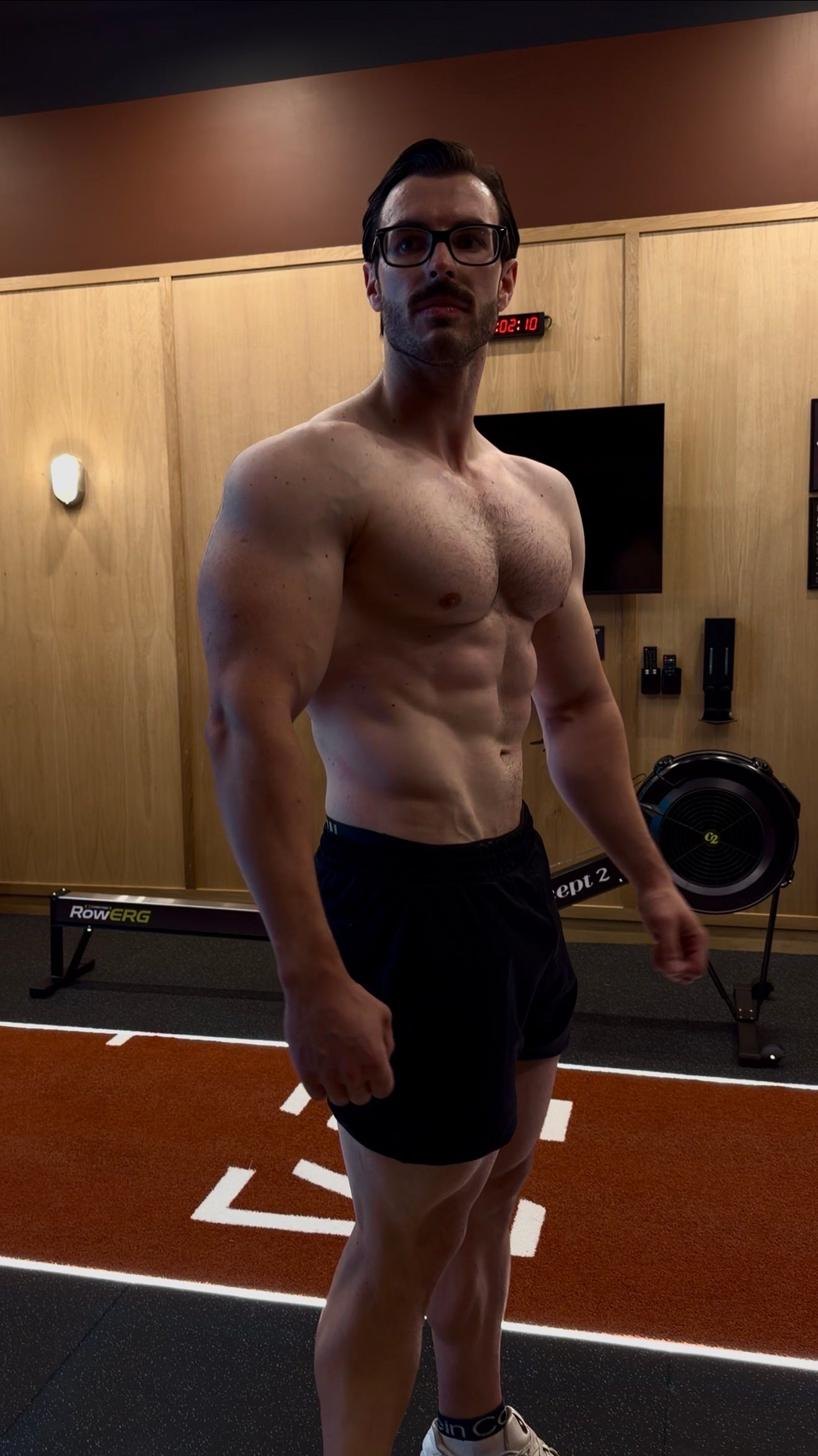
Same scale, different body
Where did your own physique story start?
At 13. I was very overweight and had been uncomfortable in my body for years. I was bullied for being fat and a bit of a nerd, and the fact that girls ignored me played its part too. In the first year, I cut my food intake drastically and lost a significant amount of weight, something I now say I would never recommend to anyone. At the time I was lifting at home with a few small weights my dad had. Then I joined a gym and it was love at first sight. After that I stopped caring about anyone's attention. Feeling strong and confident in myself did the rest.
What do the numbers look like today?
175 cm (5 ft 9 in), 93 kg (205 lb), and 15 years of training.
Tell us about the comparison photos.
The current shots and the one wearing a hat are all at exactly the same body weight, 93 kg. That hat photo is from one of my own periods of falling off the wagon, very stressed, but the number on the scale never changed. Same weight, completely different body.

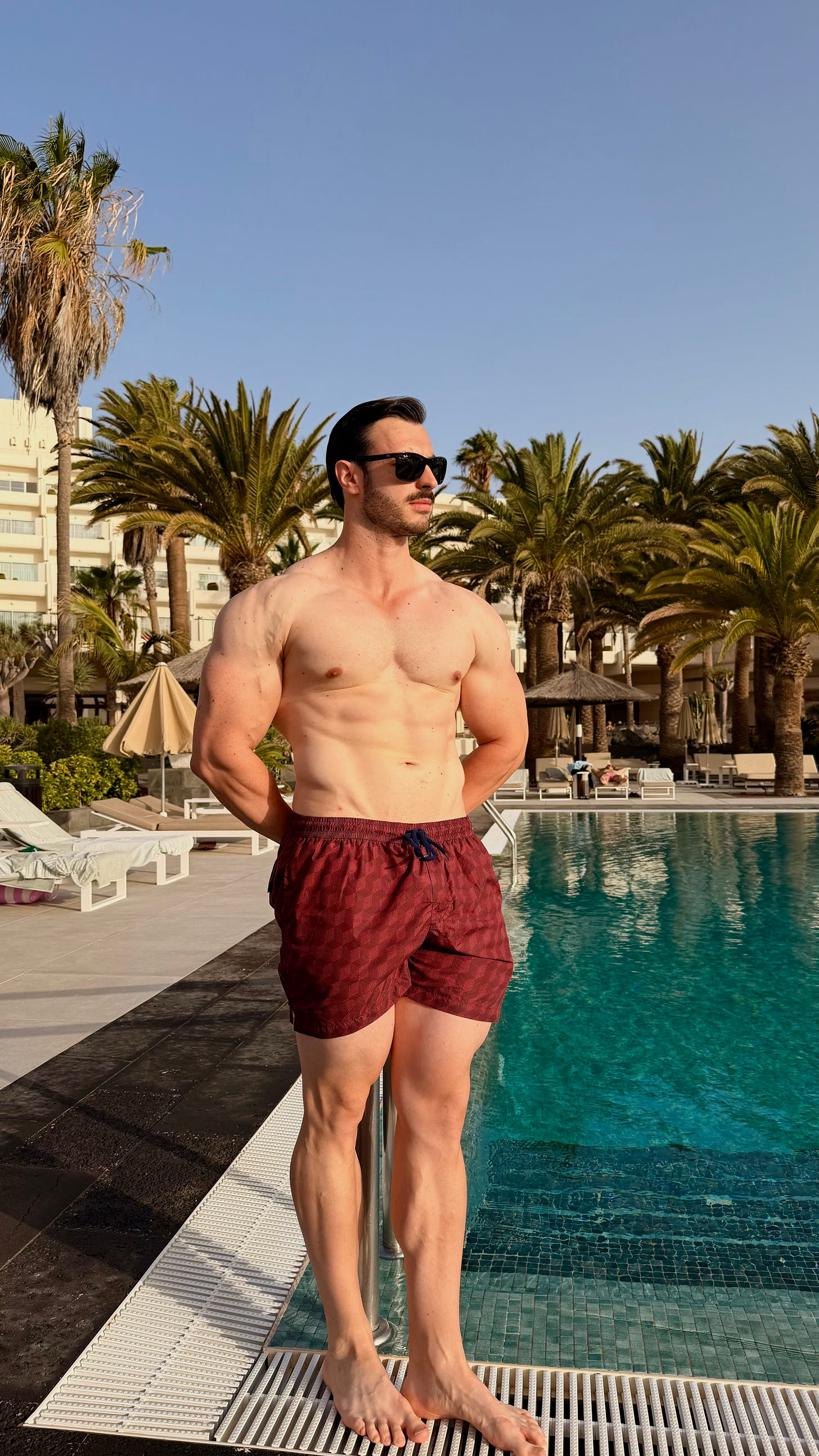
Plan for your worst week
You mentioned the yo-yo cycle. Why does it happen, even to high achievers?
Busy professionals and high achievers go through the same cycle. They want a result, so they push extremely hard. Then the routine cannot be kept, because it was never sustainable, or work gets intense, or something unpredictable happens. They drop it, lose whatever they had gained, and start again from zero. I went through that cycle many times myself. It happens because most plans are written for a week where everything goes smoothly. I do the opposite. I assume the week will go as badly as it possibly can, and whatever can still be done in that week becomes the routine. That is a routine you can be consistent with, and consistency is what ends the starting over.
How does that translate into an actual plan?
I start from the worst week, not the best one. After that everything is bespoke. There is no formula that works for everyone, apart from consistency. In practice I first look at where the person is and what they can realistically keep doing. Then we deal with stress, habits and recovery, because a body under constant stress does not respond to training and food the way it should. Only then do we push towards the goal, and we adjust every week based on results and on what is happening in their life. Nutrition follows the same rule. It has to work in restaurants, on business trips and at a desk, otherwise it will not last.
What's the biggest mistake you see busy men make?
The yo-yo. All in, then nothing, then all in again. They treat intensity as if it were progress. Adding more is the easy answer because it takes no thinking. Working out the smallest amount you can still do in your worst week takes an actual decision, and that is the thing that works.
Any philosophy that sums it up?
Plan for your worst week, not your best one. Anyone can follow a plan when life is quiet. Your results are decided by what you still do when everything goes wrong. It is how I coach, and after years of doing the opposite, it is how I train myself.
Credentials and background, for the record?
I qualified as a personal trainer at 18 and won junior titles in IFBB bodybuilding competitions. In London I co-founded and ran two private training facilities, where between 2021 and 2025 I oversaw the training of more than 1,000 clients. I left that business in November 2025 and launched my own online coaching company, FRED'S, in March 2026.
Photos: Federico Veneroni.