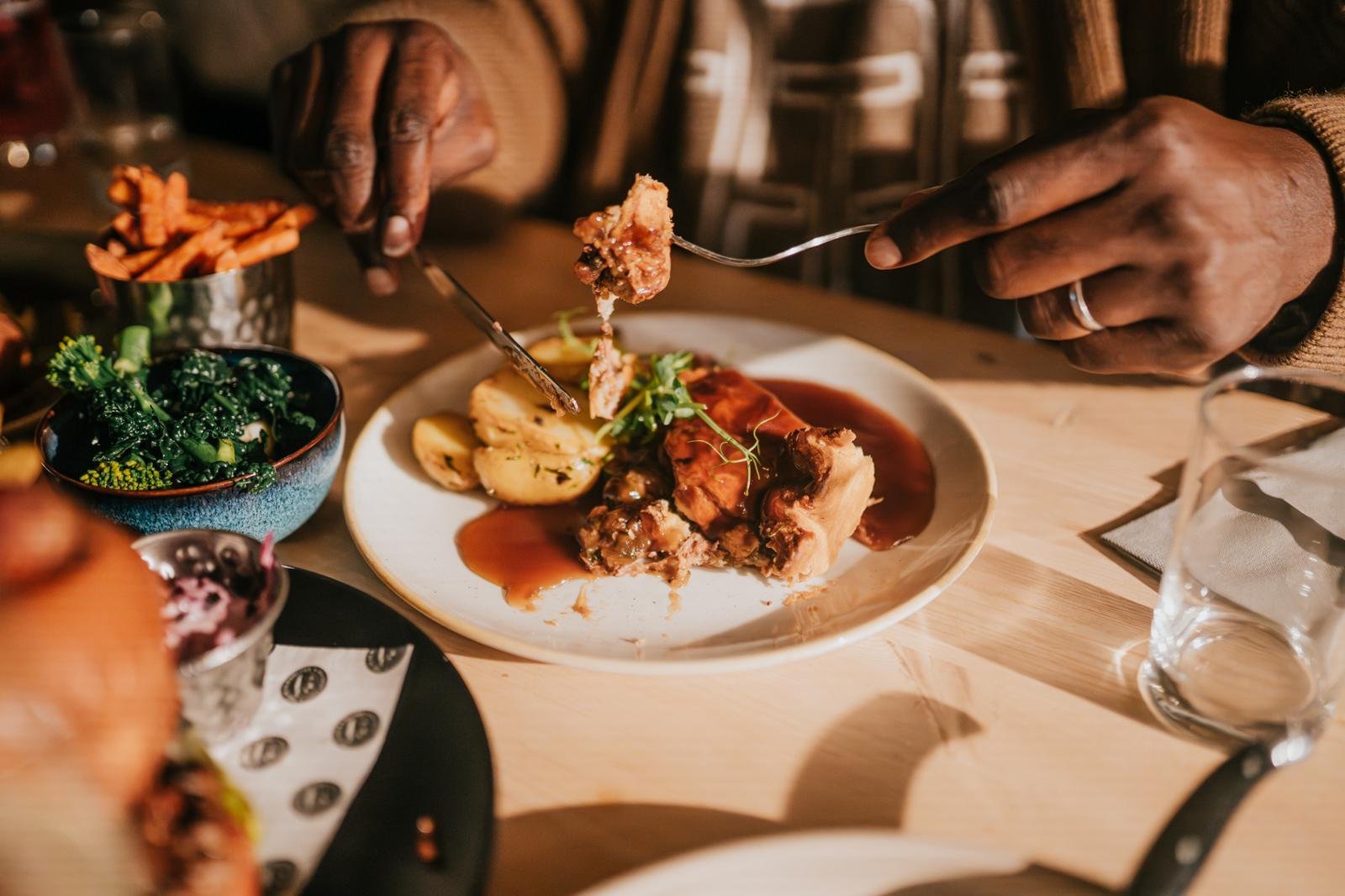
Slow eaters were 42 percent less likely to have obesity
Japanese researchers tracked eating speed and body weight in nearly 60,000 people over six years. Those who slowed down saw their weight and waist size fall.
Fullness signals take time to reach the brain. Eating quickly may mean finishing a meal before those signals arrive. A study from Kyushu University in Japan looked at what eating speed means for body weight over time.
Yumi Hurst and Haruhisa Fukuda published the analysis in BMJ Open in 2018. They used annual health check-up data from 59,717 Japanese men and women with type 2 diabetes, collected between 2008 and 2013. At each check-up, participants described their eating speed as fast, normal or slow. The researchers also recorded late dinners, after-dinner snacking, skipping breakfast, alcohol, sleep and smoking.
Because the same people were followed for several years, the analysis could test whether changes in eating speed were followed by changes in weight.
What they found
- Compared with fast eaters, slow eaters were 42 percent less likely to have obesity, and normal-speed eaters 29 percent less likely.
- People who slowed their eating over time saw reductions in body mass index and waist circumference.
- The results held after accounting for the other lifestyle habits.
What it means
Eating speed is a habit that can be changed without counting calories. Slower eating gives appetite hormones time to work and may lead people to stop earlier.
How to apply it
- Aim for meals that last at least 15 to 20 minutes.
- Put your fork down between bites and chew thoroughly.
- Eat at a table, without a screen, so you notice how full you are.
- Start meals with vegetables or soup, which take longer to eat.
- Serve a reasonable portion and wait a few minutes before deciding on a second one.
A note on the evidence
All participants had type 2 diabetes, and eating speed was self-reported, so the findings may not transfer exactly to other men. The study was observational. Short controlled trials, however, have found that slower eating reduces how much people eat at a meal.
Sources
- Hurst Y, Fukuda H. Effects of changes in eating speed on obesity in patients with diabetes: a secondary analysis of longitudinal health check-up data. BMJ Open, 2018. doi:10.1136/bmjopen-2017-019589