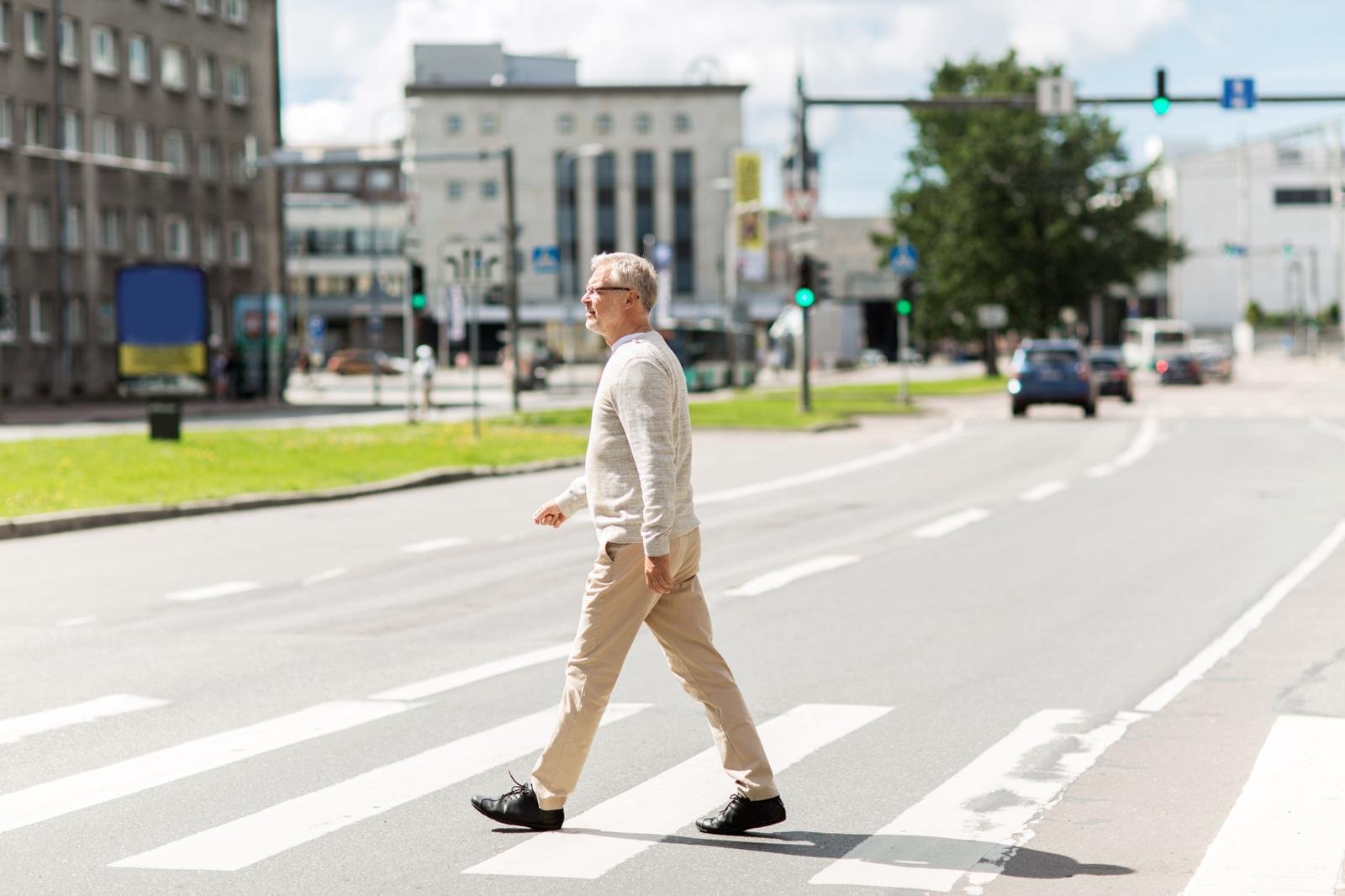
Men who walk briskly live up to 20 years longer than slow walkers
In nearly 475,000 adults, the pace people said they usually walked at predicted life expectancy better than body weight did.
How fast you walk is one of the simplest measures of physical fitness, and doctors have long used gait speed in older patients as a sign of overall health. A study from the University of Leicester looked at whether it also says something about life expectancy in middle age.
Francesco Zaccardi and colleagues published the analysis in Mayo Clinic Proceedings in 2019. They used data from 474,919 adults in the UK Biobank, who reported whether their usual walking pace was slow, steady or brisk, and linked it to deaths over the following years.
What they found
- Men who described their pace as brisk had an estimated life expectancy of 85.2 to 86.8 years, depending on their body weight.
- For women who walked briskly, it was 86.7 to 87.8 years.
- The shortest life expectancy was in slow walkers who were underweight (BMI under 20): 64.8 years for men and 72.4 for women.
- Brisk walkers lived longer in every weight category, including people with obesity.
The authors concluded that physical fitness, reflected in walking pace, may be a better indicator of life expectancy than body mass index.
What it means
Walking pace is not magic in itself. It reflects heart and lung fitness, muscle strength and general health. The useful point is that it can be trained, and that fitness appears to matter regardless of weight.
How to apply it
- A brisk pace for most adults is about 100 steps a minute, or a speed where talking is possible but singing is not.
- Build brisk walking into daily routines: commuting, errands, phone calls.
- Add some interval walking, alternating fast and easy blocks, to raise fitness further.
- If your natural pace has slowed, treat it as a signal to work on leg strength and aerobic fitness.
A note on the evidence
Walking pace was self-reported, and the study was observational, so it cannot show that walking faster causes a longer life. Illness can slow people down before it shortens their lives. The UK Biobank population is also healthier than the general UK population.
Sources
- Zaccardi F et al. Comparison of walking pace-specific mortality and life expectancy by body mass index category in middle-aged UK adults. Mayo Clinic Proceedings, 2019. doi:10.1016/j.mayocp.2018.10.029