


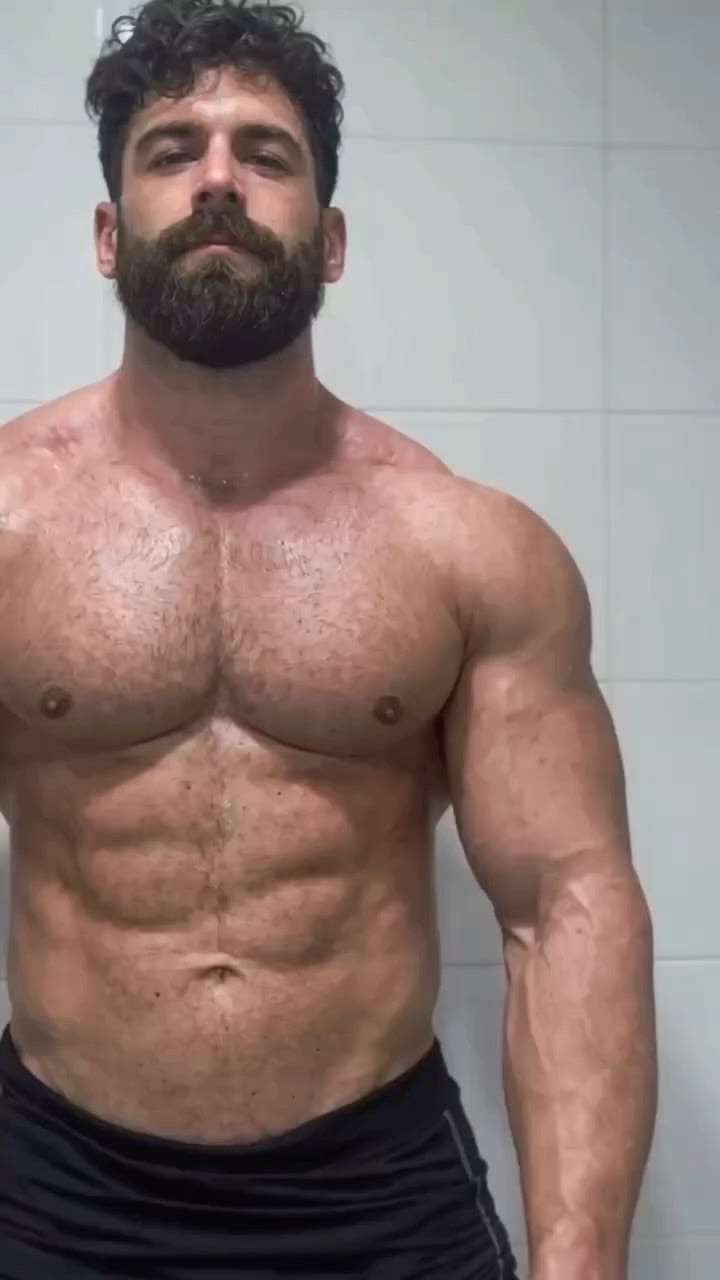
Amir Rahimi spends most of his working day at a desk. He is 28, a construction project manager in Sydney, and the job is mostly emails, schedules and site reports. The training happens after that, in the evening, six days a week.
The result is a 183 cm (6'0") frame carrying 96 kg (212 lb), with a 126 cm (49.6 in) chest over an 82 cm (32.3 in) waist. The story behind it is an office job, a split he has run for years, and one nutrition mistake he fixed late.
We asked him questions. Here is what he told us.
Where he started
Rahimi was born in Tehran and moved to Sydney, where he lives now. When he first walked into a gym he weighed about 70 kg (154 lb).
"I was skinny," he says. "I had quite narrow shoulders, thin arms and basically no muscle. Looking back at those photos is pretty funny, because I don't even recognise that version of myself."
The motive was simple. "I just wanted to look different. I was tired of being skinny. At first it was for the aesthetic, but eventually I fell in love with the process itself."
He has trained for about eight years in total. The first two were casual. He counts the last six as serious.
The turning point: eating enough
Ask Rahimi what changed his physique most and the answer is food. He trained for years without consistently eating enough calories to grow.
"Once I understood progressive overload and actually eating in a surplus, my physique started changing quicker," he says. The two work as a pair: adding load or reps over time gives muscle a reason to grow, and a calorie surplus supplies the material.
It is the most common stall we see in men who train hard and look the same year after year. The sessions are there. The food is not.
The numbers
All figures are Rahimi's own. He estimates his body fat at 9–10% and is candid about the margin: he has had caliper readings, but mainly judges by the mirror, his waist measurement and how one phase compares with the last.
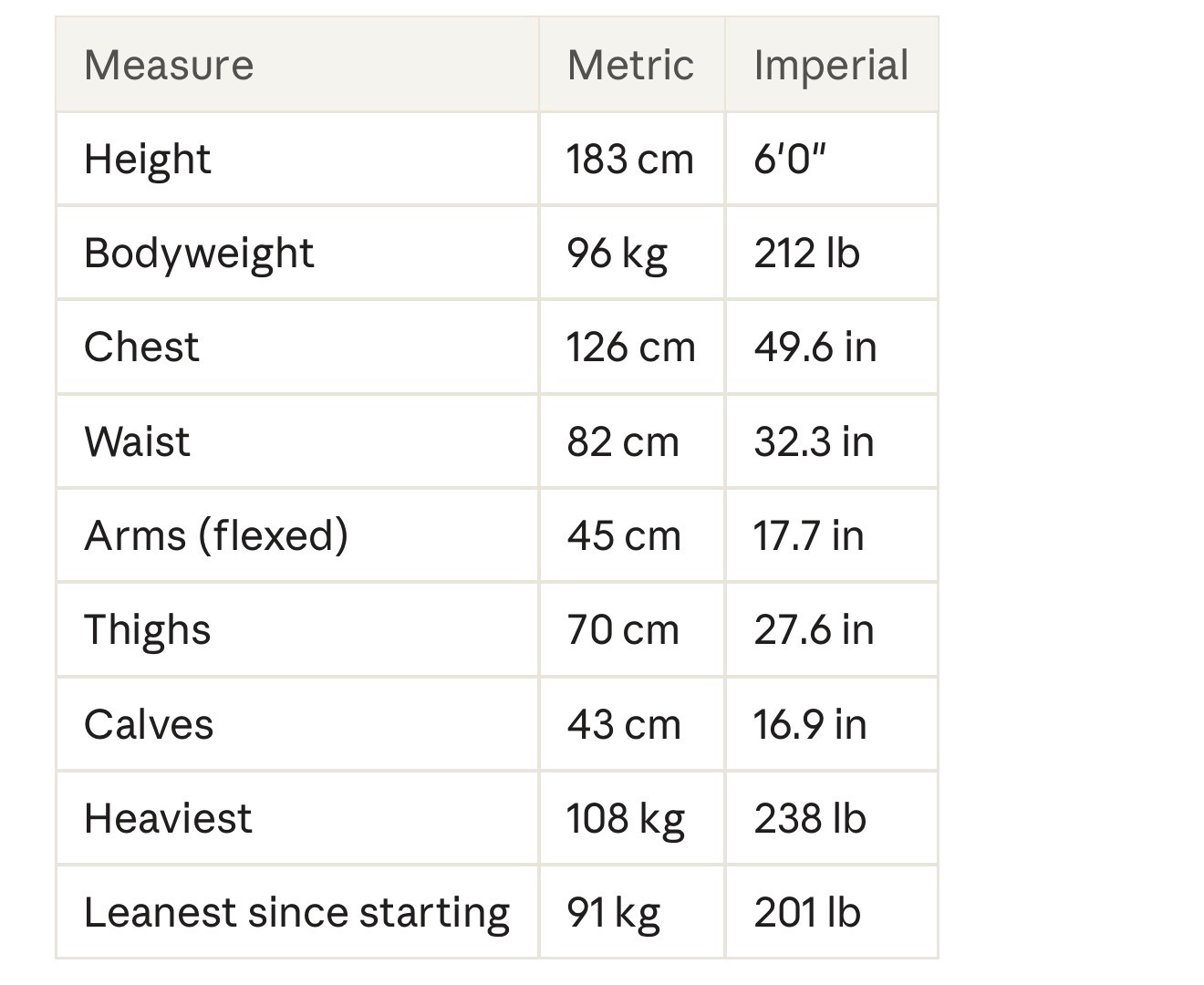
His chest measures 1.54 times his waist, and his waist is 45% of his height. That second ratio sits comfortably inside the range commonly used as a marker of healthy abdominal fat.
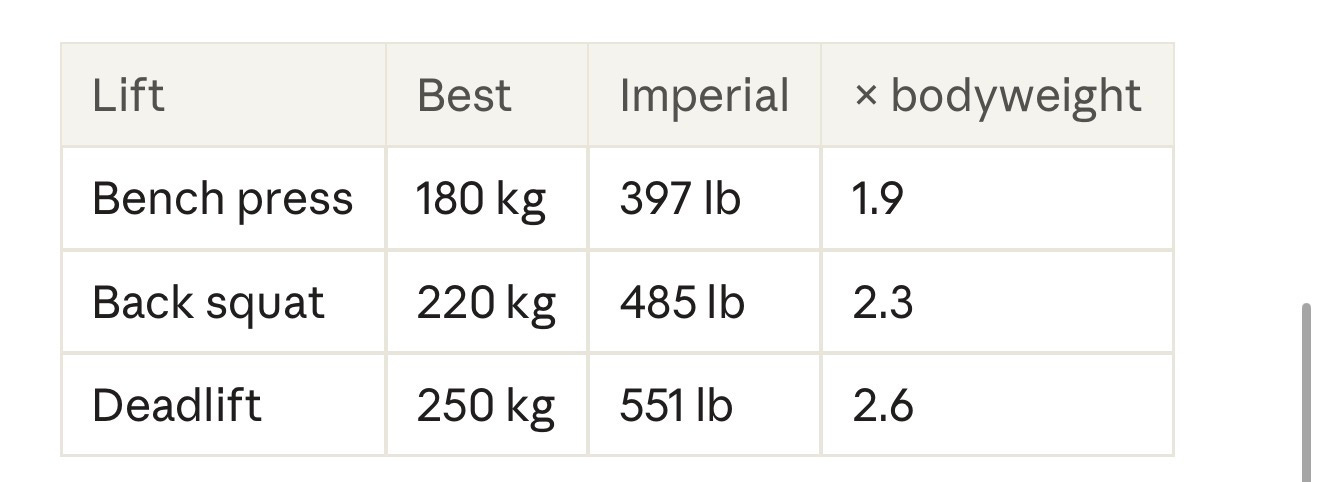
Those three lifts total 650 kg (1,433 lb), almost seven times his bodyweight.
The training week
Rahimi trains six days most weeks, for 75 to 95 minutes a session. That is between 7.5 and 9.5 hours a week under the bar, built around a desk job.
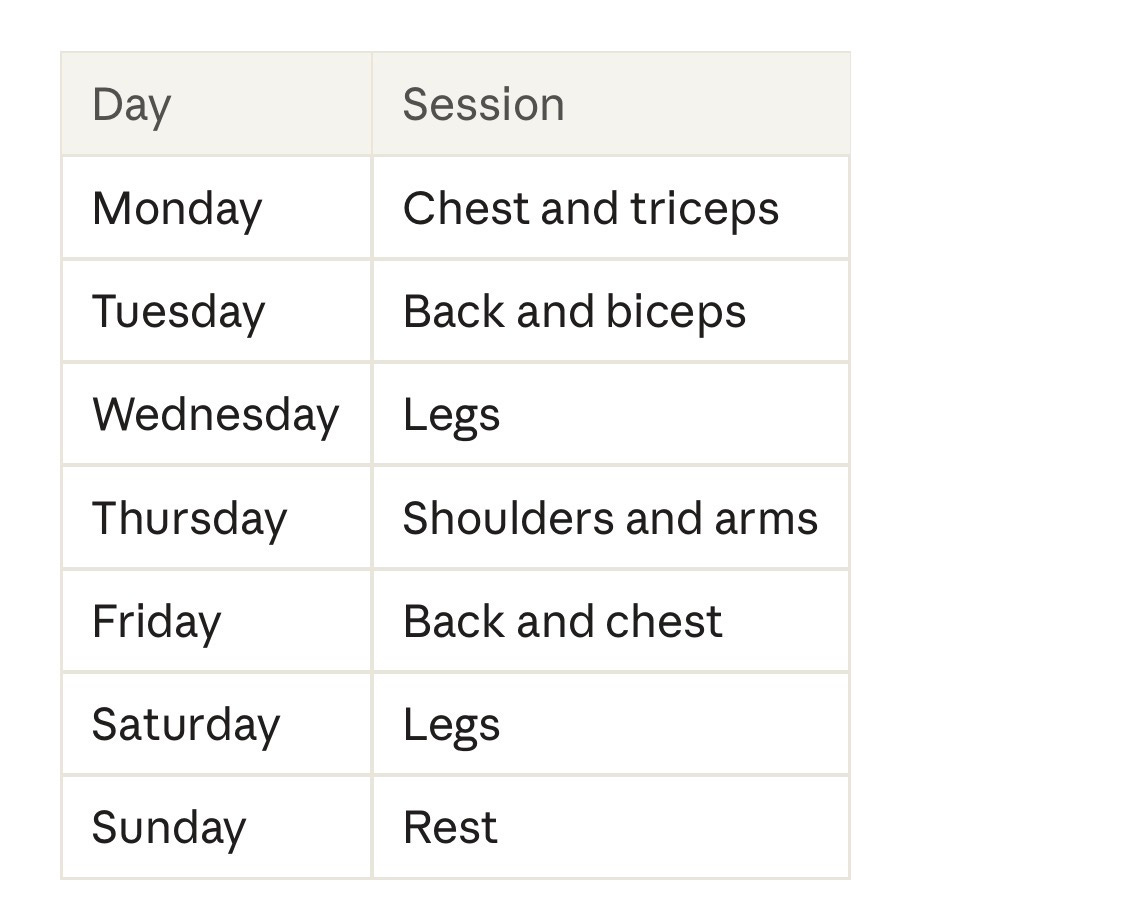
The structure hits chest, back and legs twice a week each. Biceps and triceps each get direct work twice: once after a chest or back session, once on Thursday.
His rep ranges are conventional hypertrophy territory: 6 to 12 for compound lifts and 8 to 20 for isolation work. Every so often he drops to heavy sets of 3 to 5, which keeps his top-end strength moving.
He trains in the evening. "I feel stronger later in the day, and I like having the day to mentally prepare."
The workout: his leg day
Legs get two full sessions a week, and his thighs measure 70 cm (27.6 in). He varies the order occasionally, but this is the standard session.
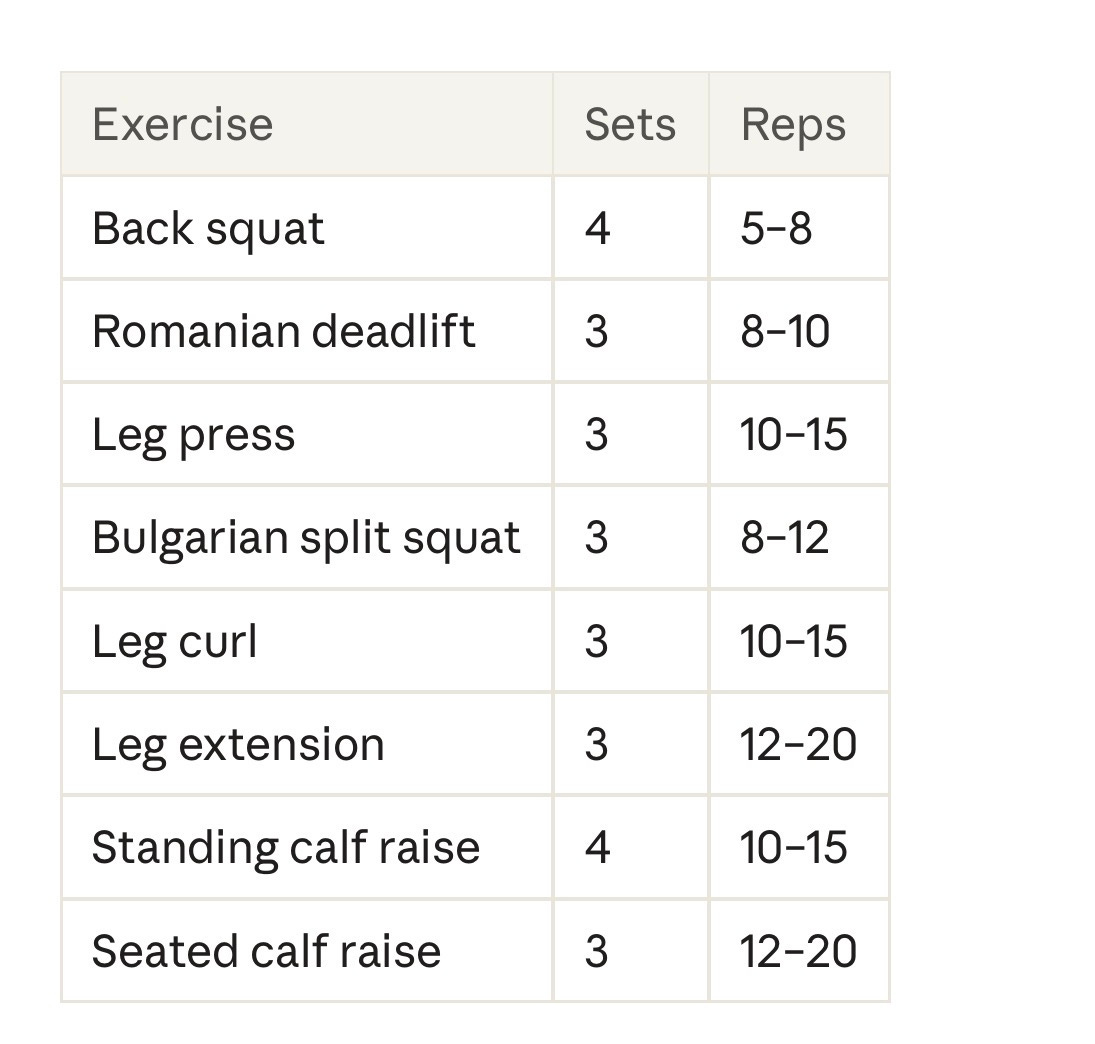
That is 26 working sets. The session moves from heavy to light: a low-rep compound first, while he is fresh, then a hip hinge for the hamstrings, then machine and single-leg work, then isolation.
The calves get seven sets across two angles. Standing, with the knee straight, loads the gastrocnemius. Seated, with the knee bent, shifts more of the work to the soleus underneath it.
The lifts he rates most
We asked for one movement per body part that has done the most for him.
Chest: incline dumbbell press. The incline angle biases the upper chest, the area he now wants to build most.
Back: weighted pull-ups. It is also his favourite exercise overall.
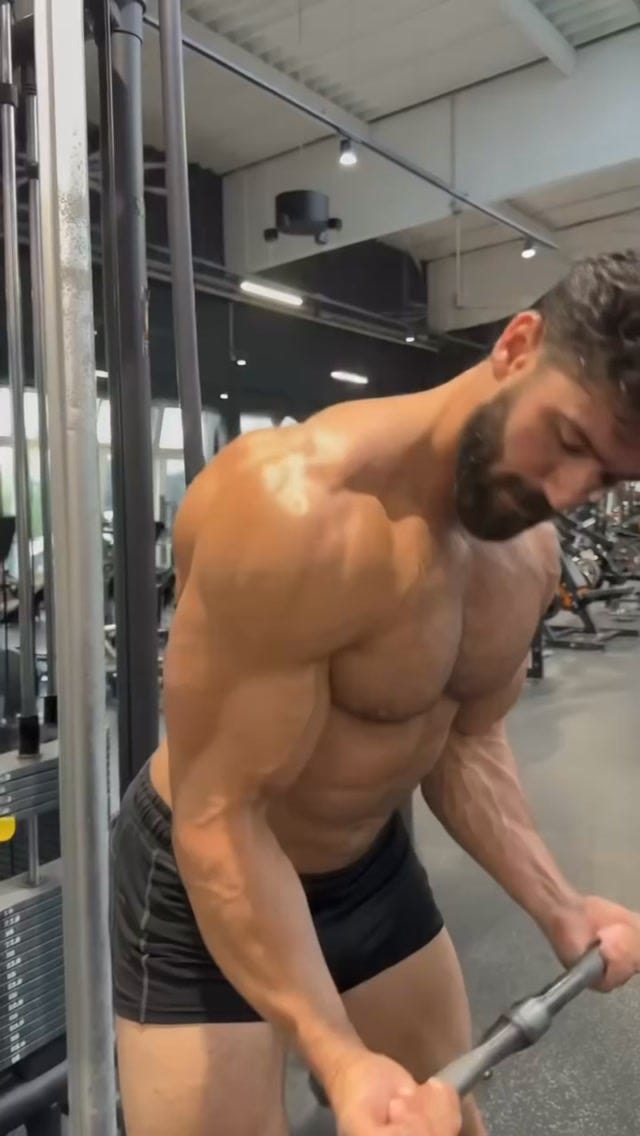
Arms: heavy EZ-bar curls. The angled grip takes some strain off the wrists and elbows, which lets him load the biceps harder.

Cardio
Three or four sessions a week, about 20 minutes each, mostly incline walking on a treadmill. That adds up to 60 to 80 minutes a week of low-intensity work. It keeps his conditioning ticking over without cutting into recovery from six lifting sessions.
Nutrition
When he is building, Rahimi aims for 3,800 calories and 220 g of protein a day. At 96 kg (212 lb), that protein works out at about 2.3 g per kilogram of bodyweight, or roughly 1 g per pound.
He currently eats four meals a day, built around food that is easy to repeat. "Nothing fancy," he says. A typical day looks like this.
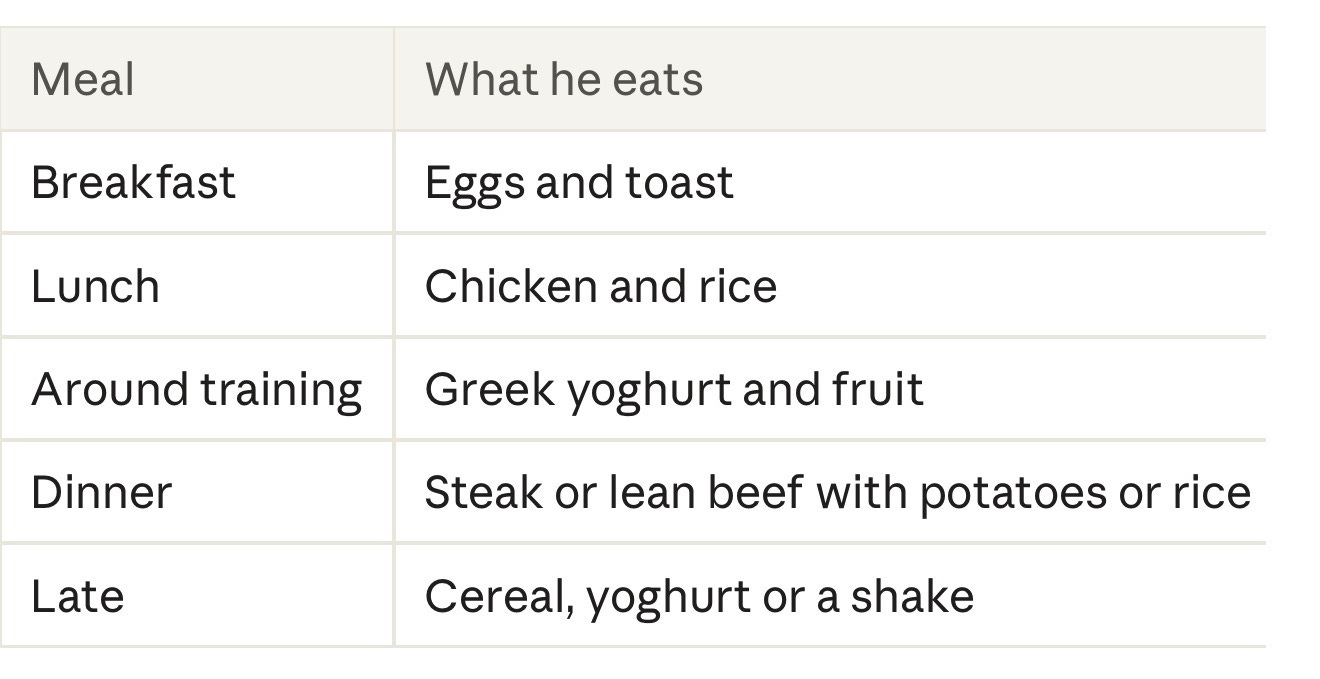
His staples are eggs, chicken, Greek yoghurt, milk, berries, vegetables and lean beef. He does not use the term cheat meal. "They're just meals that aren't part of my normal diet. Pizza is my favourite."
Supplements are basic: creatine monohydrate, whey protein, and caffeine or a pre-workout when he needs it.
Recovery and scheduling
He aims for 7 to 8 hours of sleep most nights. He drinks occasionally and not much. "I find it interferes with my recovery."
The way he protects six sessions a week around a full-time job is to treat each one as fixed. "I schedule training like an appointment, because I know something else will come up if I don't commit."
He does not let it take over, though. "Balance is good. I'm not going to cancel seeing friends because I need to go to the gym."
The setback
A shoulder problem once limited his pressing for several months. For a lifter whose training is built heavily around chest and shoulders, that was the hardest stretch.
He did not rush back to his old numbers. "I came back by strengthening weak movements, improving my technique and gradually increasing the weight back up."
The order matters. Weak links first, then technique, then load. It is the same progressive overload that built the physique, applied again from a lower starting point.
How he thinks about training
On days he does not feel like it, he goes anyway. "It may be a bad workout, but the important thing is showing up and doing what you can. Consistency is king."
The mistake he sees most in other lifters is ego lifting. "People worry too much about how much weight is on the bar and forget about actually training the muscle."
And the thing he wishes more people understood: "You don't need to destroy yourself every workout to make progress. You need sufficient stimulus, nutrition and recovery and repeat it consistently."
Asked what eight years of training has given him beyond the body, he answers without hesitating. "Confidence, and a sense of control over something I've built myself. It taught me that I can commit to something for years and actually see the result."
His advice for beginners
"Learn the basic movements, eat enough protein, sleep properly and train consistently. Measure your progress in years, not weeks."
What's next
Rahimi wants to hold roughly the same leanness while adding a few more kilos of muscle, with the upper chest, delts and back as priorities. He says he is natural, and the plan fits that: slow additions, measured in phases rather than weeks.
He posts his training at @amir.phys to document progress, and he answers the men who message him for advice. The compliment he remembers most came from a child, who told him he looked like Captain America. "I don't think I'll ever forget that."
The 70 kg (154 lb) version of Amir Rahimi had the same office hours and the same seven days a week. What changed was what he did with six evenings of them, for eight years.
Subscribe to the Men's Active newsletter, and follow @mensactivemag for a new Build every day.